
Last updated on October 27th, 2026
Edinburgh looks like a film set from the moment you step out of the station, and then it keeps getting better the closer you look. If you’re planning 3 days in Edinburgh Scotland, this is the self-guided route I’d hand to a friend: every day built around one slice of the city, hidden corners placed where they actually fit, and a plan B for rain, tired legs and non-hikers.
We did this trip as a family, and I’ve organized it the way I wish someone had organized it for us. Where the history matters, I’ll tell you. Where it just makes your day easier, I’ll tell you that too. There are no day trips here, because Edinburgh itself can fill three days without help.
Before you dive in, here’s the quick version. This plan works best for first-timers, history lovers and families, and it’s busy but very doable. Expect plenty of walking, hills and cobbles, so pack shoes you trust. Book Edinburgh Castle, Royal Yacht Britannia and The Real Mary King’s Close ahead of time, since those are the ones that fill up. And don’t forget how much of the best stuff costs nothing: the Writers’ Museum, the Scottish National Gallery, the National Museum of Scotland, Calton Hill and Arthur’s Seat are all free.
Jump to ...
Is 3 Days in Edinburgh Enough?
Yes, and it’s the sweet spot. Three days lets you cover the big sights, add a few quiet corners, and still sit down for a proper lunch. If you’ve been wondering whether three days is too much, it isn’t, as long as you stay in the city and don’t try to squeeze in a trip across Scotland.
Here’s how the different lengths compare:
| Time | What you get |
|---|---|
| 2 days | The Old Town essentials, Holyrood or the New Town, and one big view. Rushed, but good. |
| 3 days | All of the above, plus Leith, the New Town and breathing room. |
| 4 days | The 3-day plan with slower mornings and extra museum time. |
Is 2 nights enough? It can work, but only if you arrive early on day one. Two nights usually means two full days and maybe a half day at the end, so read the 2-day section further down before you decide.
This guide stays inside the city on purpose. If you’re also planning a wider Scotland trip, you’ll need more days to add on.
What Edinburgh Is Famous For
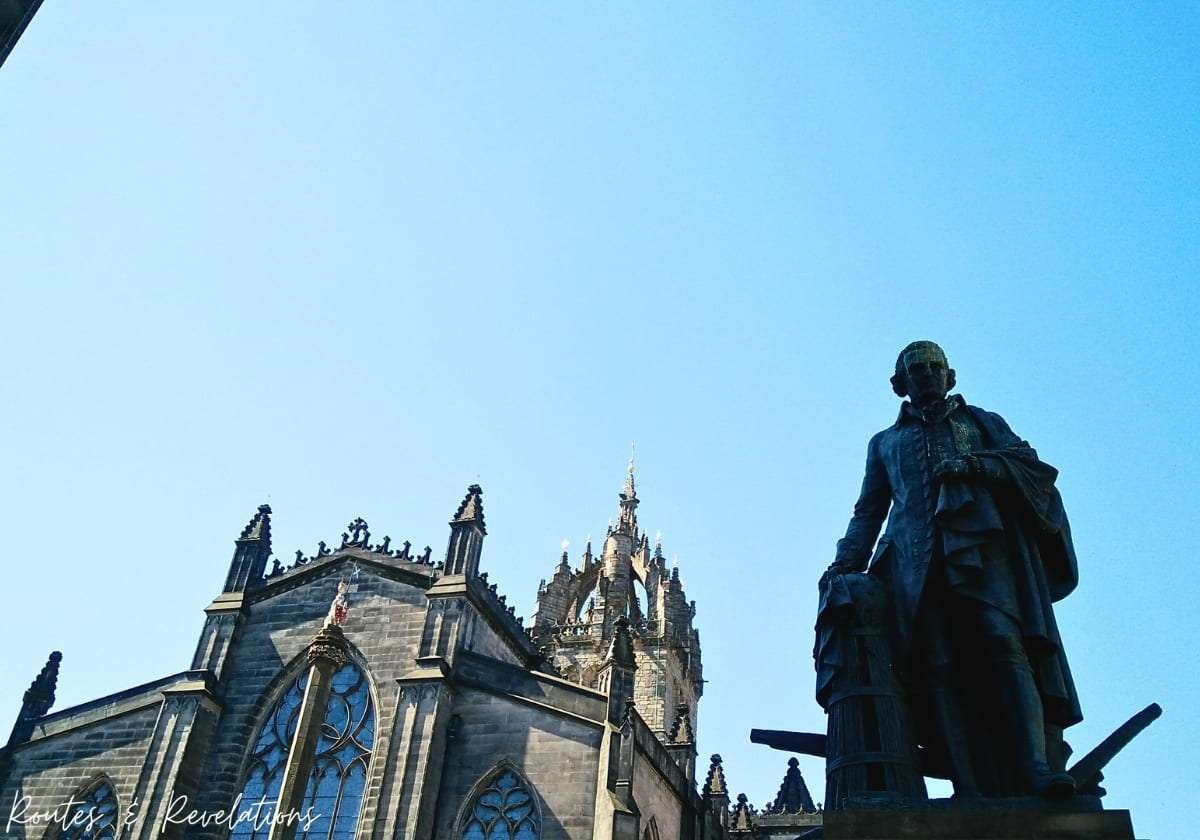
Edinburgh is famous for its castle on an extinct volcano, its medieval street plan, its writers, and the sharp contrast between two very different halves of the city. Once you understand that split, the whole place makes sense.
Old Town vs New Town in 60 Seconds
The Old Town is medieval, steep and crowded, squeezed along a ridge that runs from the Castle down to Holyrood. Buildings grew upward because there was nowhere else to go, which is why you’ll find narrow alleys (called closes) and tall, stacked tenements.
The New Town is the opposite. Built from the 18th century onward as a planned, orderly expansion, it’s all wide streets, Georgian terraces and gardens. When the Old Town got too cramped and unhealthy, the wealthy simply moved across the valley.
That contrast is the backbone of this itinerary. Day 1 and Day 2 are the Old Town. Day 3 crosses over into the New Town, with a trip to Leith first.
Planning Your Edinburgh Trip
Best Time to Visit Edinburgh
Summer gives you long evenings and the best chance of dry weather, but also the biggest crowds. August, when the Fringe takes over, is the busiest month by far, so book everything early.
Winter is quieter and atmospheric, with Christmas markets and a cozy pub-and-fire feel. The catch is daylight. In December, the sun sets mid-afternoon, so if you’re doing 3 days in Edinburgh in December or November, put outdoor stops like Arthur’s Seat and Calton Hill in the middle of the day, and save museums and tours for the dark hours.
Spring and autumn are the best balance of crowds, weather and daylight, in my opinion. Whatever the season, pack for rain.
Getting Around Without a Car
You don’t need one. Edinburgh is compact and very walkable, and most of what’s in this itinerary is within walking distance of each other. The tram runs from the airport into the city centre, and buses cover the rest. Leith, where Royal Yacht Britannia is berthed, is a short bus ride from the centre, so check the current route on the day.
One warning: walkable doesn’t mean flat. The Old Town is hilly, so wear shoes you trust.
How Much Does a Weekend in Edinburgh Cost?
I’m leaving exact prices out because they change often, and I’d rather send you to official sources than give you a stale number. What drives your budget is straightforward:
- Where you sleep. Old Town hotels cost more than ones a short walk out.
- How many paid sights you pick. The Castle, Holyrood Palace, Camera Obscura, The Real Mary King’s Close and Royal Yacht Britannia are the big ones.
- How much of the free stuff you use. Edinburgh has a lot of it, which I’ll point out along the way.
For a more detailed budget plan, see the budget section below.
Edinburgh Pass vs Paying Per Attraction
Several Edinburgh passes exist, and what’s included varies, so compare the list before you buy. As a rough rule, a pass pays off if you’re visiting three or more paid attractions, and it’s worth checking that the ones you want are actually on it. Some include Camera Obscura or John Knox House, for example, while others lean toward the Castle or whisky experiences.
Because this itinerary has a lot of free stops, I’d add up your must-see paid ones first and then decide.
Compare and buy your pass online: Edinburgh City Pass with optional castle add-on, or Royal Edinburgh Ticket, or Klook Edinburgh Pass.
Note: The City Pass is time-bound, while the Klook Pass lets you pick 2 to 6 activities spread over more days.
Where to Stay in Edinburgh for 3 Days
I’ll cover this in depth in a separate guide, so here’s the short version.
Old Town vs New Town: Which Base Is Better?
Stay in the Old Town if you want atmosphere and to be steps from the Royal Mile. You’ll pay more, and nights can be noisy.
Stay in the New Town if you want calmer streets, easier restaurant options and a quick walk to both Princes Street Gardens and the train station. You’re still within a short walk of the Old Town.
Budget vs Luxury Picks
The historic Intercontinental Edinburgh The George for a luxury pick in an enviable location on George Street or The Witchery for gothic opulence just steps away from the castle.
Choose Wilde Aparthotels if you prefer a sleek, modern apartment-style unit in Grassmarket.
Point A Hotel is a great modern boutique-on-a-budget option on Haymarket that cuts out unnecessary frills to focus on the basics.
Your 3 Day Edinburgh Itinerary
This is the self-guided route, with each day grouped by area so you’re not zigzagging across the city. Treat it as a menu rather than a contract. If you have more energy, add stops. If you don’t, drop the optional ones, which I’ve flagged. For food, I’ve given one or two lunch ideas per day, and my full guide to where and what to eat will be coming soon.
Day 1: Castle, Royal Mile and Medieval Edinburgh
Today is the heart of the Old Town, working from the top of the Royal Mile down and back to Grassmarket.
Morning:
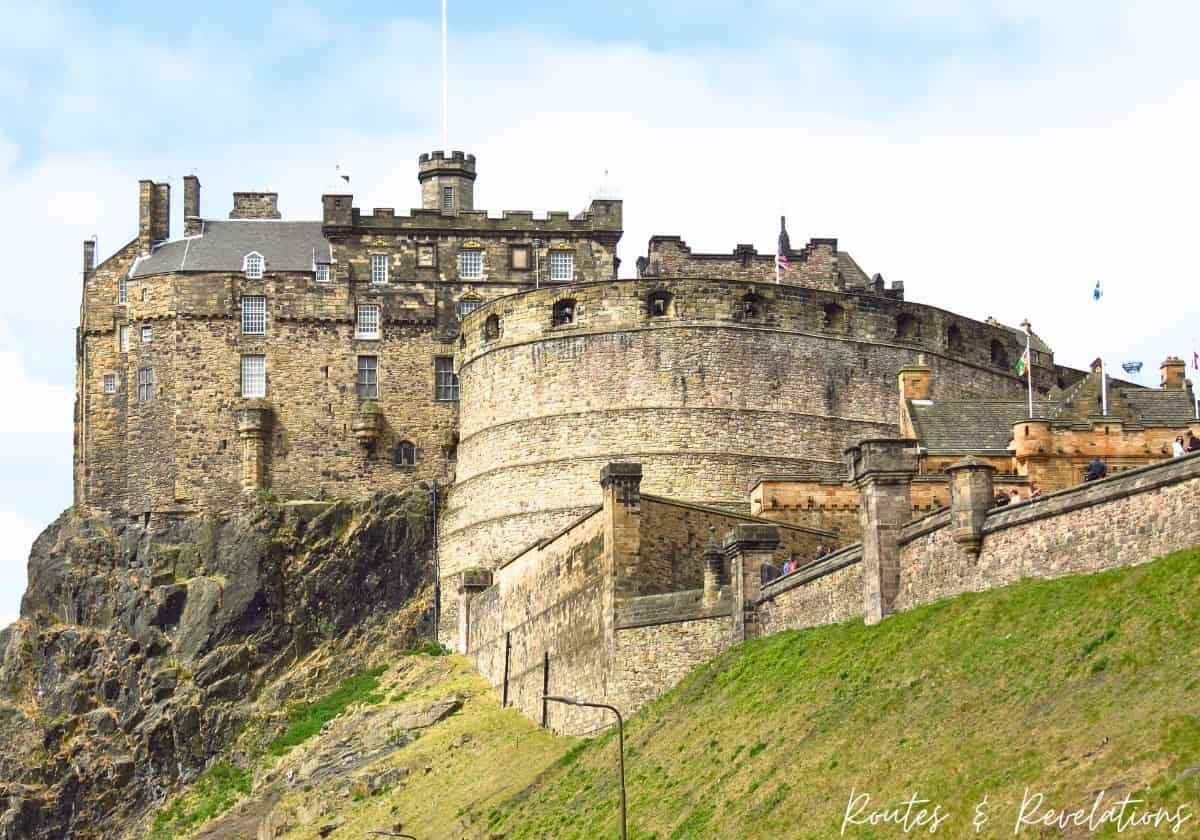
1. Edinburgh Castle. Get there when it opens and book ahead. The Castle sits on Castle Rock, an extinct volcano, and it has been a fortress, royal residence and military base over the centuries, so you’ll want a couple of hours. Book your standard admission tickets to Edinburgh Castle from the official website before you go. To get some interesting history behind the castle, consider taking a guided tour that includes entry tickets.
2a. For kids: Camera Obscura. It’s right at the Castle’s gate on Castlehill, so there’s no extra transit. It’s a Victorian-style optical attraction with illusions and hands-on rooms, and it’s the kid-friendly counterweight to a morning of stone and battlements. Get your Camera Obscura tickets here.
2b. For book lovers: The Writers’ Museum and Makars’ Court. A few minutes downhill, tucked inside Lady Stair’s Close just off the Royal Mile, is a free museum in a 17th-century house. It’s dedicated to Robert Burns, Sir Walter Scott and Robert Louis Stevenson. Outside, in Makars’ Court, the paving stones are engraved with quotes from Scottish writers, and plenty of people walk right over them without noticing.
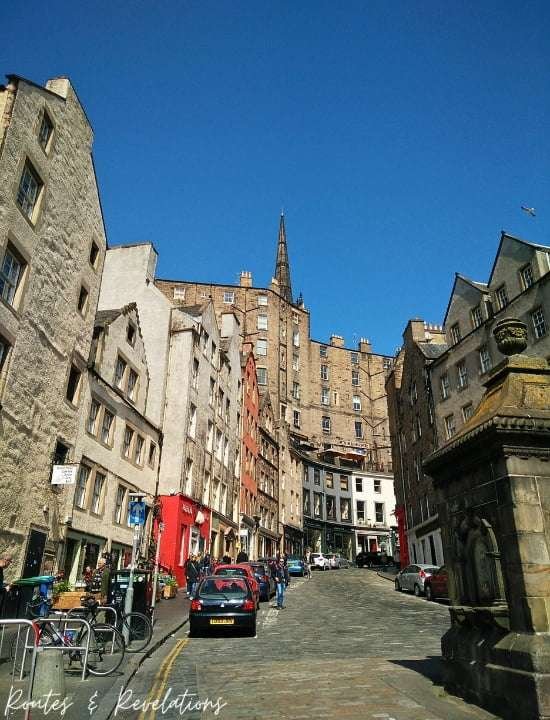
3. Lunch: It’s a good time to stop for lunch, and Victoria Street is packed with some good options for either a quick lunch or a longer sit-down one. Oink, a hog roast roll spot, Bertie’s Proper Fish & Chips, and Scotts Kitchen for Scottish cooking, are 3 recommendations on Victoria Street. This curved, colorful lane that drops toward the Grassmarket (the West Bow end), is one of the most photogenic spots in the city. Fans and local guides like to say that it is the inspiration for Diagon Alley in Harry Potter, so spend a few minutes with your camera here.
4. Advocate’s Close. This is one of the narrow closes that run off the Royal Mile, and it’s a good place to feel the steep, stacked layout of the Old Town. It dates back to the 15th or 16th century and connects down to Market Street near the foot of Cockburn Street. We took it as a short detour, and it takes five minutes.
Afternoon:
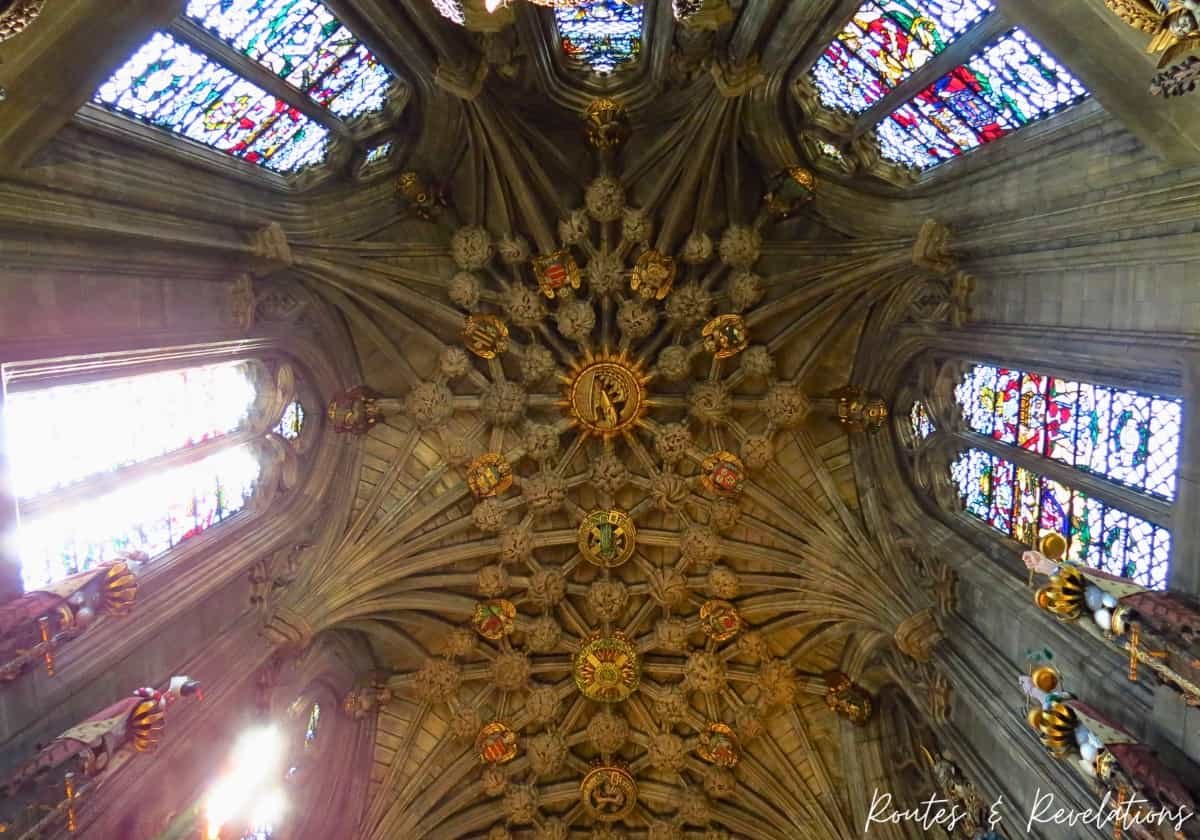
5. St Giles’ Cathedral. You can’t miss it on the Royal Mile, thanks to the crown-shaped spire. Step inside and look up at the vaulted ceiling, then find the Thistle Chapel, a small, ornate room that’s one of the most detailed spaces in the city. John Knox was minister here in the 1560s, which ties in nicely with John Knox House further down the street. While you can enter for free during worship times, a new entry fee was just introduced in October of 2026 for all other times and it is a bit steep – £12 for non-Scottish residents over 16. It includes a guided tour, so it is worth it, especially if you love gothic architecture. Allow 30 to 45 minutes.
6. The Real Mary King’s Close. From the cathedral, it’s a short walk along the High Street. We took this as a tour, which is the only way to see it, and it’s a set of preserved streets beneath the Royal Mile that were built over and sealed away. The guides tell the stories of the people who lived there. Some of the tales blend history with legend, which is part of the fun. The tour lasts one hour. Book ahead: The Real Mary King’s Close tour.
7. See from outside: John Knox House and Moubray House. These two sit side by side on the High Street. John Knox House dates to around 1470 and is considered the oldest house in Edinburgh. Moubray House, from around 1477, is recognized as the oldest continuously occupied residential house. You can stop for a quick look and a photo.
The Royal Mile is the heart of the Old Town in Edinburgh, so don’t rush exploring this string of streets. Here’s our comprehensive guide to the Royal Mile that points out its history, geography, important things to see and more.
Late afternoon and evening:
Turn back via the historic Cowgate, cross under South Bridge and on to Chambers Street to get to…
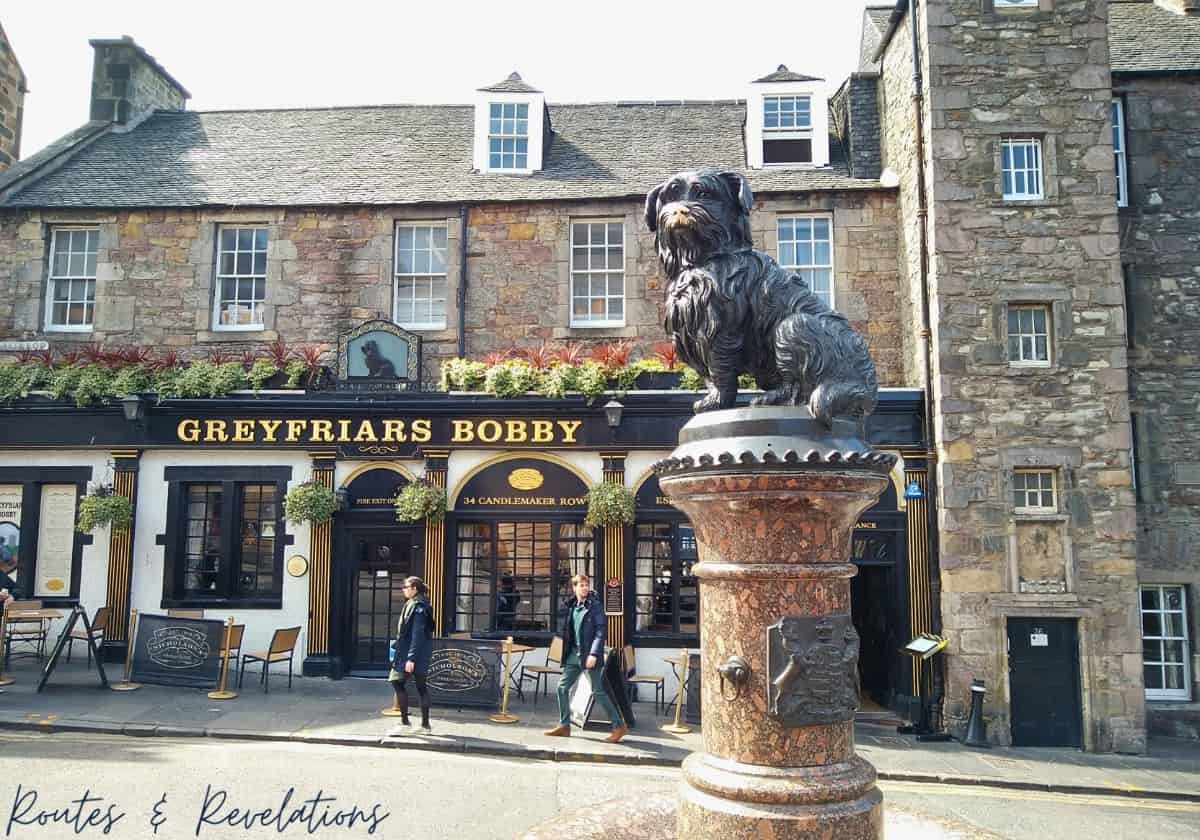
8. Greyfriars Kirkyard: This is one of the most atmospheric spots in the Old Town, and it’s easy to feel the history here. The burial ground dates back to the 16th century, and the National Covenant, a key document in Scotland’s religious conflicts, was signed here in 1638. Near the Chambers Street gate, you’ll find the statue of Greyfriars Bobby, the little terrier said to have guarded his owner’s grave for years. Historians question parts of that tale, but it’s a beloved one. Wander the gravestones and the old mausoleums, and look up for a great view of the Castle above the wall. Allow 30 to 45 minutes.
For Potterheads: several real gravestones in Greyfriars share names with characters from the Harry Potter series, including Thomas Riddell, which will ring a bell for anyone who knows Tom Riddle. Also look out for William McGonagall (Professor Minerva McGonagall), Elizabeth Moodie (Alastor “Mad-Eye” Moody), and Charles/Francis/Charles Black (Sirius Black) among others. Fans have been hunting for them for years.
9. The Grassmarket. From Greyfriars Cowgate exit, it’s an easy downhill walk to this wide, lively square beneath the Castle. It was Edinburgh’s main market place for centuries, and it was also the site of public executions, which gives the pubs and shops around it some dark history. Today it’s one of the best places to sit with a drink, people-watch and look up at the Castle rock rising above the rooftops. For book lovers: Armchair Books, just past the square on West Port, is a good last stop. If your legs are done, this is a nice place to end Day 1.
Day 2: Holyrood, Parliament and Arthur’s Seat
Today you work the other end of the Royal Mile, then climb.
Morning:
10. The Canongate closes. Start at the lower part of the Royal Mile, called the Canongate, and take in Bakehouse Close and Dunbar’s Close Garden on your way down toward Holyrood. We visited both, and they’re two of my favorite quiet corners. Bakehouse Close is a well-preserved hidden pocket of old buildings and fans of the show Outlander will recognize this filming location. Dunbar’s Close Garden is a peaceful, formal garden tucked behind the street. They’re the sort of places most people stroll straight past.
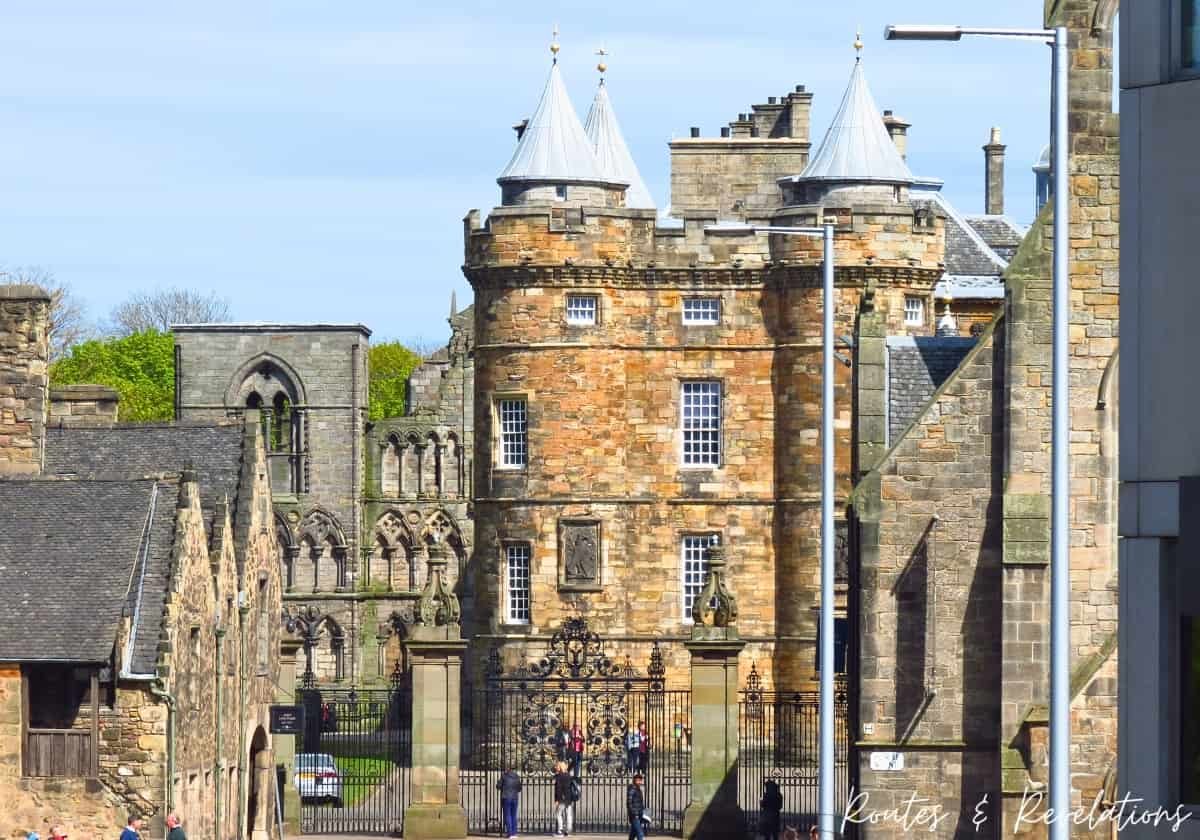
11. Holyrood Palace. This is the monarch’s official residence in Scotland, and it’s closely tied to Mary, Queen of Scots, who lived here. Book ahead and allow a good couple of hours.
12. Scottish Parliament. It’s directly opposite the Palace, so this is an easy pairing. The building is modern and unusual, and it’s a fascinating architectural contrast to the medieval street you just walked down. Check the visiting hours and allow for a 30-45 minute self-guided tour of the public areas.
13. Lunch: The Holyrood 9A, a short walk away on Holyrood Road, is a casual spot with burgers, vegetarian options, and a kid-friendly menu. Keep lunch quick so you hit the hill with energy.
Afternoon:
14a. Arthur’s Seat. This extinct volcano rises right behind the Palace and gives you a sweeping view over the city and the sea. Allow an hour or two depending on your route and pace. The classic route starts near the palace, is well-marked, and takes you past St. Anthony’s Chapel ruins. The shorter but steeper Dunsapie Loch route from the east side is up grassy and rocky paths. If you have more time, take the Salisbury Crags route that winds up for scenic views. A popular route back down is via the Piper’s Walk and Volunteer’s Walk across the lower eastern grasslands. Take water, wear proper shoes, and check the weather. The wind at the top can be fierce. If you like pretty botanical gardens, visit Dr Neil’s Garden either before or after Arthur’s Seat. It is open till dusk and is free.
14b. If hiking up a hill isn’t your thing, spend the afternoon at Dean Village instead. It’s a former milling village tucked into the Water of Leith valley, just a short ride from the centre, and it feels a world away from the Royal Mile. The path along the Water of Leith is flat, leafy and a genuine hidden gem. From there, you can wander on toward Stockbridge and finish at Circus Lane, one of the most photogenic cobbled streets in the city.
If you take this swap, cross Circus Lane off Day 3. Everything else stays the same.
14c. Rainy day or tired legs? The National Museum of Scotland is free, covers a huge range of topics, and is especially good for teens. It makes a good backup for either option.
Day 3: Leith, the Royal Yacht and the New Town
Today you start in Leith, then cross into the Georgian side of the city before exploring Calton Hill.
Morning:
15. Royal Yacht Britannia: The yacht carried the British royal family around the world from 1953 until it was decommissioned in 1997, and it’s now permanently berthed in Leith. You can walk through the state rooms, the crew quarters and the engine room. Book ahead, and leave early so the day doesn’t feel rushed.
16. Lunch: Leith’s waterfront, known as The Shore, is a good place to eat. Fishers in Leith is a popular seafood option, and there’s also a shopping centre next to the yacht if you need something quick with kids.
Afternoon:
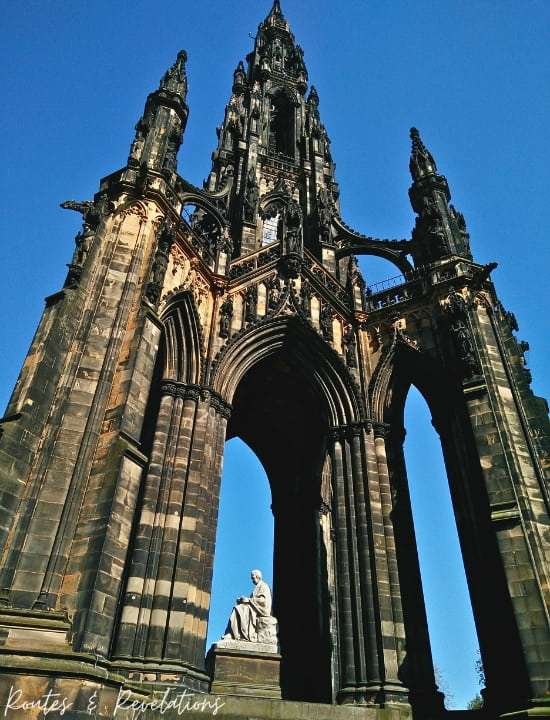
17. From Leith, take a tram to St Andrew Square and make your way to the Scott Monument on Princes Street next. This massive Victorian gothic monument to Scottish author Sir Walter Scott is the second-largest monument to a writer in the world. For £9, you can ascend the tower that stands 200 feet tall via 287 narrow spiral steps if you think you’re up for it. The four different viewing platforms give you clear lines of sight in all directions around the city.
18. Scottish National Gallery: Back in the center, this is the adults’ stop, and it’s free to enter. It holds a spectacular collection of fine art from the early Renaissance to the mid-20th century. Beyond its global masterpieces, a brilliant, newly expanded underground wing shines a spotlight exclusively on Scotland’s own art pioneers.
19. The gallery sits at the foot of the Mound, and next to it is the West Princes Street Garden where you can wander for a bit. Don’t miss the world’s oldest floral clock with a working clock mechanism and a cuckoo bird feature and the ornate cast-iron structure of Ross Fountain.
20. New Town stroll: Walk through the Georgian streets, and notice how different the proportions and the street plan feel after two days in the Old Town. If you didn’t swap in the Dean Village the previous day, Circus Lane is a good detour here if you still have energy. This curved cobblestoned street is famous for its mews houses draped in ivy and floral displays – a photographer’s delight!
21. For book lovers: Topping & Company, a big independent bookshop at 2 Blenheim Place near Calton Hill (the next stop), has rolling ladders and free tea and coffee for browsers.
Evening:
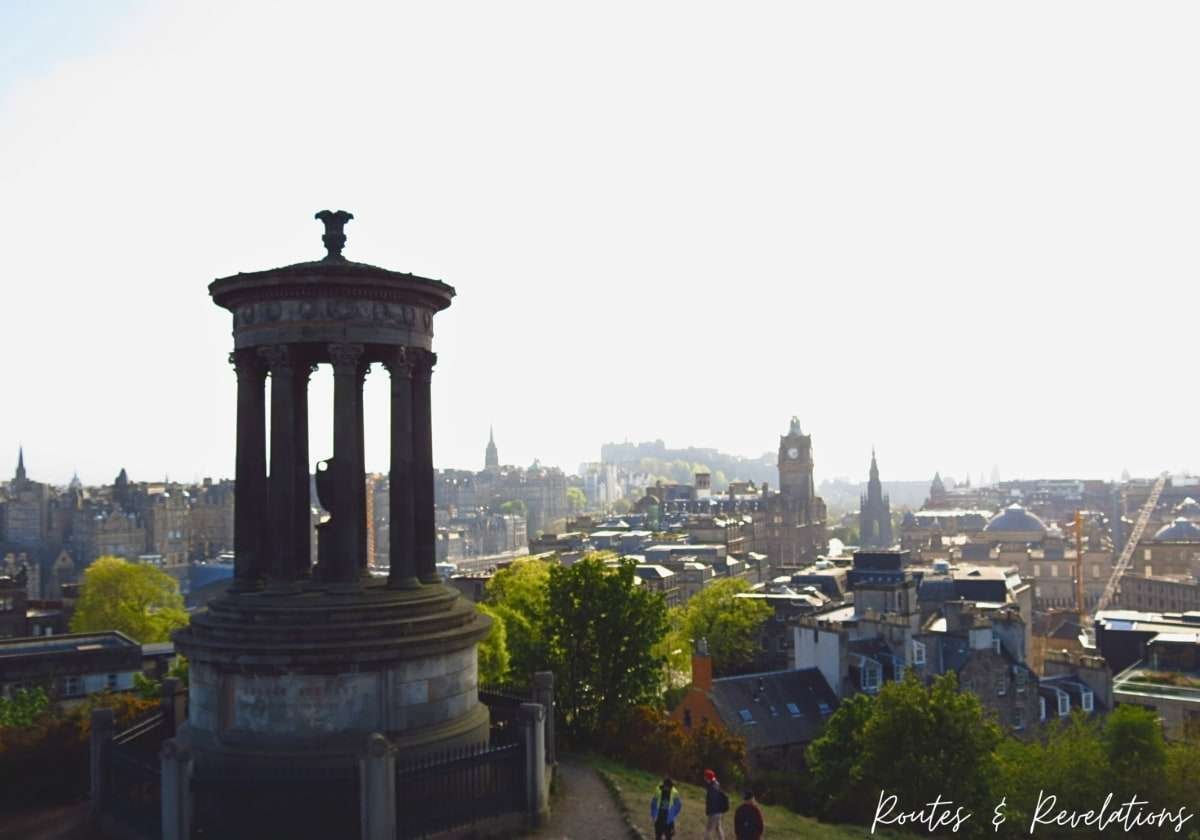
22. Calton Hill at sunset: It’s an easy climb, and the views over Arthur’s Seat, the Old Town and the water are among the best in the city. It’s also covered in monuments, including the unfinished National Monument.
23. If you have time for a final treat, take a bus back to Princes Street and a short walk to Castlehill for a whisky tasting and guided journey through Scotland’s whisky regions at The Scotch Whisky Experience. It makes a good last-night finish.
Hidden Gems for Book Lovers and Potterheads
Edinburgh has a strong literary identity, and you can weave it into the itinerary without changing the plan.
- The Writers’ Museum and Makars’ Court (Day 1, after the Castle). Free, small and easy to fit in, with paving stones that many people miss.
- Armchair Books (Day 1, late afternoon). Just past the Grassmarket on West Port, ideal for a browse after Victoria Street.
- Topping & Company (Day 3, before Calton Hill). A short walk from the top of the city centre, and a good place to rest before the sunset climb.
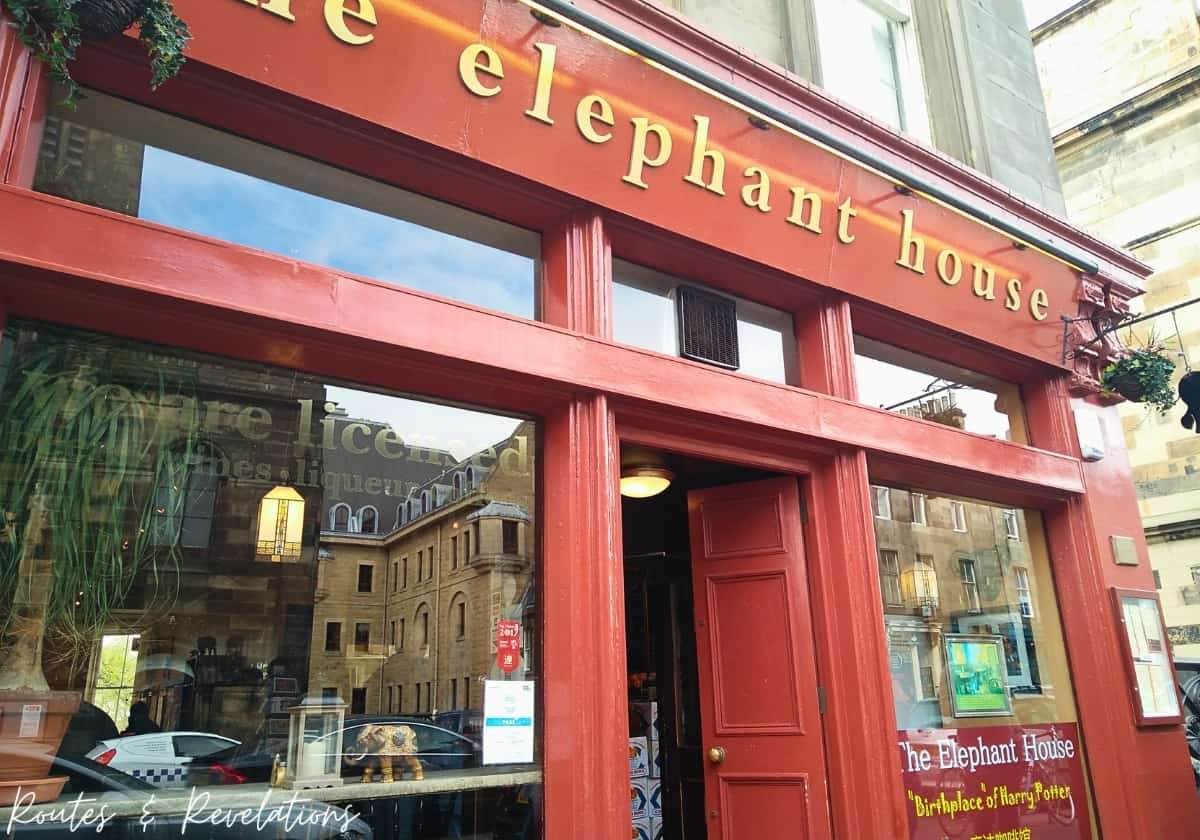
- Potter-linked spots (Day 1). Greyfriars Kirkyard and Victoria Street are popularly linked to J.K. Rowling’s Edinburgh years, though how much they inspired the books is debated. The Elephant House cafe on George IV Bridge is the self-proclaimed “Birthplace of Harry Potter,” where she drafted parts of the early Potter books.
The Potter books and movies are represented across many more cities and villages across the UK. Here are just a few other destinations to visit if you’re a Harry Potter fan: Lacock in Wiltshire, Oxford, and Blenheim Palace in Oxfordshire.
Only 2 Days in Edinburgh? What to Cut
Two days is enough to enjoy Edinburgh, but you’ll make trade-offs. Here’s what I’d keep, merge and cut.
| Keep | Merge | Cut | |
|---|---|---|---|
| Day 1 | Castle, Royal Mile, St Giles’ | Writers’ Museum and Makars’ Court | The Real Mary King’s Close, Greyfriars stretch if short on time |
| Day 2 | Canongate closes, Holyrood Palace, Arthur’s Seat (or the Dean Village swap) | Merge Princes Street and Scott Monument from Day 3, Calton Hill added in the evening | National Museum of Scotland |
| Day 3 | Not applicable | Not applicable | Royal Yacht Britannia, Scottish National Gallery, New Town stroll |
What You’ll Miss
The biggest loss is Royal Yacht Britannia, because Leith needs a proper half day. You’ll also skip the Gallery and most of the quieter parts of the New Town side of the city.
Edinburgh With Kids and Teens
Edinburgh works well with kids if you pace it. The trick is spreading the heavy history across the day and giving them a hands-on stop to look forward to.
- Camera Obscura on Day 1 is the kids’ stop, and it sits right next to the Castle.
- Royal Yacht Britannia on Day 3 suits curious kids, with a lot to see and touch.
- Arthur’s Seat works for active teens, and it feels like a real adventure.
- National Museum of Scotland is free and a reliable backup for teens on a wet day.
A few practical notes: cobbles and steep closes are tough with strollers, so bring a carrier if you have a baby. Build in snack breaks, and don’t pack more than three main stops a day.
Edinburgh on a Budget (or a Splurge)
Free Things to Do in Edinburgh
A lot of the best of Edinburgh costs nothing:
- The Writers’ Museum and Makars’ Court
- The Scottish National Gallery
- The National Museum of Scotland
- Arthur’s Seat and Calton Hill
- Walking the Royal Mile and the closes
- Dean Village and the Water of Leith Walk
Where to Splurge

If you’re picking one or two upgrades, the best ones are a skip-the-line Castle ticket and a guided tour of The Real Mary King’s Close, since the guide makes the experience. A whisky tasting is a good third if you have the budget.
A Note for Solo Travelers
Edinburgh is easy to do alone. It’s compact, well lit in the main areas, and full of places where eating solo feels completely normal. Use the same plan, and consider a guided tour on day one to meet people.
Quick Answers
Is 3 days in Edinburgh too much?
No. Three days gives you time for the Old Town, Leith and the New Town without rushing, and it’s the best fit for a first visit.
What’s the best way to spend a weekend in Edinburgh?
Follow Day 1 and Day 2 of this plan, and add the Calton Hill sunset to Day 2. That covers the essentials in a long weekend.
Is Edinburgh good in winter or December?
Yes, if you plan around the short daylight. Do your outdoor stops at midday and keep museums and tours for the late afternoon.
What’s the best Edinburgh tour if you have 3 days?
A guided walking tour of the Old Town or a fun Ghost Tour after dark are two popular types of tours. The tour of The Real Mary King’s Close brings the history to life.

