
Ever imagined a place where a single nobleman’s passion turned into one of Europe’s most significant cultural treasures? In 1852, Hans Freiherr von und zu Aufseß transformed his dream into reality by founding what would become the Germanisches Nationalmuseum in Nuremberg.
When I visited the Germanic National Museum I was blown away by its size and scope. From prehistoric artifacts to Renaissance masterpieces, this cultural powerhouse houses over 1.3 million objects in collections spanning many time periods, telling the fascinating story of German-speaking peoples. It is the biggest cultural history museum in German-speaking countries.
It’s where medieval monastery walls meet modern architecture, and where ancient hand axes share space with Dürer’s imperial paintings – a testament to centuries of human creativity and innovation. I spent hours exploring the Germanisches Nationalmuseum exhibits and still felt like I barely scratched the surface.
The museum has some true masterpieces on display. I was especially impressed by the world’s oldest globe and the works of Albrecht Dürer and Rembrandt. I also loved the medieval art section, which includes beautiful altarpieces and religious sculptures, and the sections on Pre- and Early History.
If you’re planning a visit while exploring Nuremberg, I’d recommend setting aside at least 2-3 hours to see the main Germanisches Nationalmuseum highlights. There’s just so much to take in. Grabbing an audio guide is helpful to learn more about key pieces. And don’t miss the museum shop – I found some great books and postcards to bring home as souvenirs.
Jump to ...
Germanisches Nationalmuseum Overview
Before diving into the galleries, here’s a quick overview of the Germanisches Nationalmuseum, Germany’s largest museum of cultural history, and the country’s answer to “what is the national museum of Germany?” It’s not affiliated with a single German state or city government; it’s an independent research institution that happens to call Nuremberg home.
- Founded: 1852 by Hans Freiherr von und zu Aufseß
- Collection size: around 1.3 million objects in total holdings, with roughly 25,000 on permanent display
- Location: Kartäusergasse 1, 90402 Nuremberg. It’s a short walk from the main train station
- Hours: Tuesday–Sunday, 10 AM–6 PM (Wednesdays until 8:30 PM); closed Mondays
- Admission: €10 adults / €6 reduced / €14 family ticket
- Recommended visit time: 2-4 hours
History and Foundation of the Germanisches Nationalmuseum
The Germanisches Nationalmuseum in Nuremberg has a rich history dating back to the mid-19th century. It’s grown from a small collection to one of Europe’s biggest cultural museums.
Architectural Evolution
The museum’s buildings tell a story of their own. I was struck by the mix of old and new. The original structure from 1852 is long gone, destroyed in World War II. But parts of an old Carthusian monastery still stand, giving the place a medieval feel.
The museum’s expansion in the 19th century brought with it stunning neo-Gothic additions that perfectly complement the medieval architecture. These extensions weren’t just about adding space – they were designed to create an atmosphere that matches the historical significance of the collections within. Look up when you’re walking through the neo-Gothic sections – the architectural details in the ceiling work are often overlooked but absolutely stunning.
The post-war era brought fresh perspectives to the museum’s architecture. Modern elements were added to create an interesting contrast with the historical buildings. These additions weren’t about competing with the old – they were carefully designed to enhance the visitor experience while respecting the museum’s historical character.
From the medieval monastery walls to sleek modern exhibition spaces, each architectural element tells part of the museum’s evolving story. It’s like a timeline of German architecture all in one spot.
Significant Milestones


The museum’s story starts with Hans Freiherr von und zu Aufseß in 1852. He wanted to create a place to study German history and culture. It was a big dream for a time when Germany wasn’t even a unified country yet.
When the museum first opened its doors, it went by the simpler name ‘Germanisches Museum.’ But here’s an interesting tidbit: in 1871, right around the time the German Empire was established, it got an upgrade to its current name.
Over the years, the collection grew fast. By 1900, it was already a major cultural institution. World War II was a big setback, with many items lost or damaged. But the museum bounced back.
Today, it’s home to over 1.3 million objects. From prehistoric tools to modern art, it’s got it all.
Exploring the Collection

The Germanisches Nationalmuseum houses an incredible range of artifacts spanning German history. I found the sheer variety and quality of items on display really impressive.
If you’re short on time, focus on Levels 0 and 1 with the must-see areas like the Albrecht Dürer gallery, medieval and Renaissance collections, and an extensive display of artifacts from prehistoric times to the early 20th century. Noteworthy items include the Behaim Globe and a Bauhaus-era kitchen.
You can get a physical map at the reception or store the official digital version on your phone.
Prehistory and Early History
The museum’s prehistoric section is delightful. You can see ancient stone tools and bronze weapons that are thousands of years old. One highlight was a reconstructed burial from the Iron Age. It gave me a vivid sense of how people lived back then. The Golden Cone of Ezelsdorf-Buch, a Late Bronze Age artifact found in Southern Germany, is a tall cone-shaped object made of thin sheet gold. It belongs to a group of artifacts known as Bronze Age Golden hats, likely worn by special functionaries during ceremonies.
The Roman period exhibits were fascinating too. I loved the intricate jewelry and colorful glass vessels. A huge stone altar caught my eye – it had detailed carvings of Roman gods.
Give yourself at least 30 minutes to take in this section. There’s a lot to see, but the clear labels make it easy to follow.
Medieval Collection and Artifacts

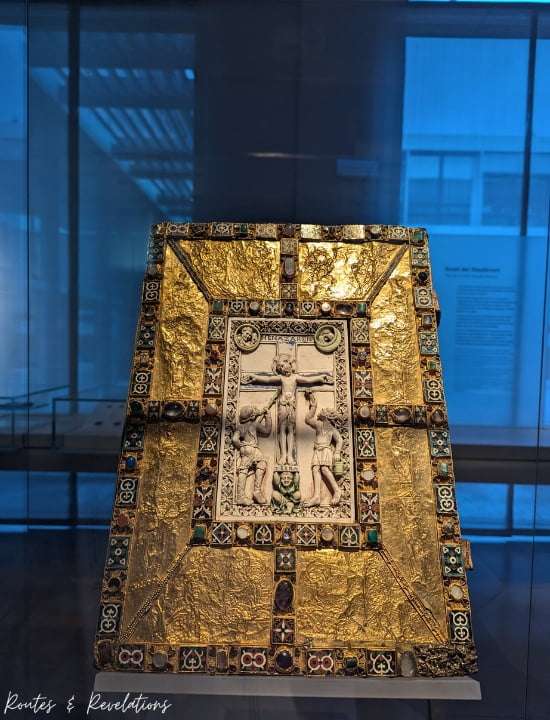
The museum’s medieval collection is a must-see. I was amazed by the ornate religious art. Golden reliquaries and jewel-encrusted crosses showed the wealth of the medieval church. Suits of armor and swords from knights gave me a sense of medieval warfare. I also enjoyed seeing everyday items like pottery and woodcarvings.
One standout piece was a beautifully preserved tapestry depicting a royal hunt. The colors were still so vivid after hundreds of years. Don’t miss the stained glass displays – they’re stunning when the light shines through.

I’d suggest spending about 45 minutes here.
Renaissance Artworks

The Renaissance section is packed with treasures. I saw paintings by famous German artists like Albrecht Dürer and Lucas Cranach.
Intricate scientific instruments showed the era’s advances in astronomy and math. I was fascinated by the Behaim Globe (Erdapfel) from the 1492. The Erdapfel, the oldest surviving terrestrial globe, is made of a laminated linen ball in two halves, strengthened with wood and covered with a painted on map based on navigational charts.
The museum has a great collection of Renaissance furniture too. Ornate cabinets and chests gave me a glimpse into the homes of wealthy merchants.
Plan for at least 45 minutes in this section. There’s so much to take in, and you’ll want time to appreciate the details.
Baroque to 19th Century

Moving into later periods, I found an impressive array of Baroque art and decor. Lavish gold-framed mirrors and porcelain figurines showed the opulent style of the time.
The 18th and 19th century galleries had some surprises. I didn’t expect to see early photographs and daguerreotypes. They gave a haunting glimpse of people from 150 years ago.
I loved the collection of traditional German folk art. Colorful painted furniture and intricate lace showed the creativity of everyday people.
This section took me about 30 minutes to explore since I was also exploring baroque palaces in several German cities during my trip. However, the variety in this museum keeps it interesting throughout.
Science and Daily Life

But it’s not all paintings and sculptures here. The museum gives you a peek into historical scientific advancement through its collection of astrolabes and other fascinating instruments.
And if you’re curious about how people actually lived, you’ll love the exhibits on medicine and various crafts.
Modern and Contemporary Exhibits
The museum brings German cultural history right up to the present day. I saw striking modernist furniture designs from the Bauhaus movement.
There’s a small but powerful section on World War II and its aftermath. Personal items and photographs tell individual stories from this difficult period.
The contemporary art collection is always changing. When I visited, there was an exhibit of bold abstract paintings by German artists. It was cool to see how modern creators are continuing Germany’s artistic traditions.
I’d recommend 20 minutes for this section. It’s a bit smaller than the others, but still full of interesting pieces.
The Music Collection
The German national museum’s music collection is a treasure trove for music lovers. I loved seeing the range of instruments and musical artifacts on display. It’s a must-see for anyone interested in the history of music.
Historical Instruments
The museum has an amazing variety of old instruments. I saw everything from lutes from the Middle Ages to baroque harpsichords. One of my favorites was a 16th-century viola da gamba – it was in such good condition! The craftsmanship on these instruments is incredible.
Don’t miss the rare 1720s Nuremberg harpsichord. It’s tucked away in a corner, but it’s worth seeking out.
There’s also a cool interactive area where you can hear what some of the instruments sound like. Plan to spend at least 20 minutes here.
Scores and Compositions
The museum has a great collection of old music scores and manuscripts. I saw original works by Bach, Mozart, and Beethoven. It’s pretty cool to see their actual handwriting! There are also some rare medieval music books with beautiful illustrations.
One highlight for me was a 15th-century choir book. The detail in the illuminated letters was amazing.
They rotate the displayed scores regularly to protect them from light damage. So you might see different pieces each time you visit. I’d suggest allowing about 15 minutes to really appreciate this section.
Library and Research Facilities
The Germanisches Nationalmuseum’s library is a treasure trove for history buffs and researchers alike. It’s a vast collection with user-friendly services. It houses some truly unique materials. There are rare books, manuscripts, and prints that span centuries of German cultural history. One highlight is the collection of medieval illuminated manuscripts with the intricate artwork. There’s also a sizeable assortment of early printed books, including some beautiful incunabula from the 15th century.
The library is welcoming to visitors. Anyone over 18 can use it with just an ID card. The reading room is quiet and spacious – perfect for focused research. The staff is super helpful if you need assistance. Ask the librarians about their digital collections. They’ve scanned many rare items, making them easier to access and study up close on computer screens. One cool feature is their scan-on-demand service. If you can’t visit in person, they’ll digitize materials for you.
Visitor Information
The Germanisches Nationalmuseum is easy to visit and offers lots to see and do. Here’s what you need to know before your trip.
How to Get to the Germanisches Nationalmuseum
The museum sits in the south of Nuremberg’s historic center, an easy walk from the main train station. If you’re arriving by U-Bahn, take U2 or U3 to Opernhaus, or U1 to Lorenzkirche. Both stops are about five minutes’ walk away.
Coming from Munich, Frankfurt, or another German city, high-speed rail is the easiest way in. You can compare and book train tickets to Nuremberg here.
Opening Hours and Admission
The museum is open Tuesday to Sunday from 10 AM to 6 PM. On Wednesdays it stays open until 8:30 PM, and if you time it right, admission is free after 5:30 PM on Wednesdays (special exhibitions excluded), which is one of the best-kept secrets for a budget-friendly evening visit. It’s closed on Mondays and some holidays.
Adult tickets cost €10, reduced tickets (students, seniors) are €6, and a family ticket (2–6 people, max. 2 adults) is €14. School classes and youth groups pay just €1 per person.
You can skip the ticket line entirely by booking a day ticket online in advance, which also covers any special exhibitions running during your visit.
Nuremberg Card and Combo Discounts
If you’re planning to visit several sights, the Nuremberg Card is worth a look. For around €38, it gives you 48 hours of free entry to the Germanisches Nationalmuseum and roughly 30 other museums and attractions across Nuremberg and Fürth, plus free public transport within Zone A. You can check current pricing and book the Nuremberg Card here.
Guided Tours and Workshops
I highly recommend either taking a guided tour or the museum’s audio guide. The tours run daily and last about 90 minutes and cost €3 on top of admission. Book ahead online to guarantee a spot. The audio guide costs the same, lasts 60 minutes, and includes the museums highlights.
The museum hosts cool workshops too, like a medieval calligraphy class. They have options for kids and adults covering art, history, and crafts. Check their website for the current schedule.
Photography Tips and Best Photo Spots
Photography is generally permitted throughout the permanent collection for personal, non-flash use. Flash and tripods aren’t allowed, both to protect the artworks and to avoid disturbing other visitors. Some special exhibitions restrict photography entirely, so check the signage at the entrance to each hall.
My favorite spots for photos: the Behaim Globe display, the stained glass collection in the medieval galleries, and the neo-Gothic ceiling details in the older wing. Look up as you walk through, they’re easy to miss.
Accessibility and Amenities
The museum is wheelchair-friendly with ramps and elevators. They offer free wheelchairs and walkers to borrow.
There’s a nice café on-site serving light meals and snacks. You’ll also find a gift shop with unique souvenirs and books.
Lockers are free to use for storing bags and coats. The museum is centrally located and easy to reach by public transport – it’s just a short walk away from the train station.
Other Top Museums to Visit in Nuremberg
The Germanisches Nationalmuseum is Nuremberg’s biggest museum, but it’s far from the only one worth your time. If you’re building out a full museum-focused itinerary, here are a few of the best museums in Nuremberg to pair with your visit:
- Nuremberg Imperial Castle (Kaiserburg): the medieval fortress overlooking the old town, with sweeping city views.
- Albrecht Dürer’s House: the Renaissance master’s actual home and workshop, a nice complement to the Dürer works on display at the Germanisches Nationalmuseum.
- Toy Museum (Spielzeugmuseum): Nuremberg has been a toy-making hub for centuries; great for families.
- DB Museum (German Railway Museum): one of the best transport museums in the country.
- Documentation Center Nazi Party Rally Grounds: a sobering, essential stop for understanding 20th-century Nuremberg.
- New Museum (Neues Museum): contemporary art and design, a nice contrast to the historical focus elsewhere.
If you plan to visit more than two or three of these, the Nuremberg Card will likely pay for itself.
Frequently Asked Questions
People often have questions about visiting this Nuremberg art and history museum. Here are some common ones I’ve encountered, along with my insights from my trips there.
How much time should I allocate for a visit to the Germanisches Nationalmuseum?
I’d say set aside at least 2-3 hours to see the main highlights. If you’re really into history or art, you might want about 4 hours. I met folks who’ve gone back multiple times to explore it all.
Grab a map at the entrance and plan your route. This way, you can focus on the areas that interest you most.
Are there any specific collections at the Germanisches Nationalmuseum that reflect Nuremberg’s history?
Yes! The museum has some great exhibits that showcase Nuremberg’s rich past. I was really impressed by the Stone and Bronze Age galleries, along with the 16th-century galleries.
They have some of Albrecht Dürer’s famous paintings. His portraits are stunning.
There’s also a section on Nuremberg’s role in the Holy Roman Empire. It’s fascinating to see how the city shaped German history.
Is there a particular time of year that is best to visit the Germanisches Nationalmuseum?
Honestly, any time is good. It’s an indoor museum, so weather isn’t a big factor. That said, winter visits can be nice. It’s cozy inside when it’s cold out. Plus, there are fewer crowds.
Summer can get busier with tourists. If you go then, try to arrive early to beat the rush.
Keep an eye out for special exhibitions. They sometimes have cool temporary displays that are worth planning around.
Is photography allowed in the Germanisches Nationalmuseum?
Yes, personal non-flash photography is generally allowed throughout the permanent collection. Flash and tripods aren’t permitted, and some special exhibitions restrict photography entirely. Check the signage as you enter each hall.
Does the Nuremberg Card include the Germanisches Nationalmuseum?
Yes. The Nuremberg Card gives you free entry to the Germanisches Nationalmuseum along with around 30 other museums and attractions in Nuremberg and Fürth, plus free public transport for 48 hours. It’s worth it if you’re planning to visit more than two or three paid sights.

