
Last updated on July 29th, 2026
The first time we mentioned Fushimi Inari Taisha to friends back home, most of them already knew the photo, that endless tunnel of vermilion gates climbing up a mountain. It’s one of the most photographed spots in Japan for good reason. But here’s what nobody tells you upfront – half the people who’ve heard of it skip it because they’ve read it’s a crowded tourist trap, and the other half show up completely unprepared for what it actually involves, thinking it’s a quick fifteen-minute photo stop rather than a proper hike up a mountain.
A couple we met near the beginning fell into that second camp. They nearly turned back half an hour in, underdressed and out of water, before realizing they’d barely scratched the surface of what this place offers.
So consider this the guide they needed. Yes, the crowds are real, but they’re also very manageable if you know when to show up. And yes, it’s more than a photo op, but that’s exactly what makes it worth doing properly. Here’s everything you need to know: the history behind those gates, the logistics of getting there, the best time to visit, and how to actually tackle the hike without regretting your shoe choice halfway up.
Jump to ...
What Is Fushimi Inari Taisha?
Taisha means “Great Shrine”. Fushimi Inari Taisha sits at the base of Mount Inari in southern Kyoto, and it’s the head shrine for over 30,000 Inari shrines scattered across Japan. So yes, this is the original. The main Inari shrine everything else is based on.
Inari Okami is the Shinto deity of rice, agriculture, and prosperity, which explains why business owners and merchants have been coming here for centuries to pray for good fortune. That’s also why you’ll see so many torii gates. Each one is a donation from an individual or a company, a physical thank-you for success, and new gates are still being added today. The shrine dates back to 711 AD, making it one of the oldest and most important Shinto sites in Japan, and its fame really comes down to two things: the sheer scale of the gates and how deeply woven it is into Japan’s cultural and spiritual history.
Read more: Find out which other important shrines you should visit on a 2 week self-guided tour of Japan.
The Story Behind the Thousand Torii Gates

Walking through the gates, called senbon torii (literally “thousands of torii gates”), is the whole experience. They’re not just decorative. Each gate represents a wish, a prayer, or gratitude for a wish already granted. Look closely and you’ll see the donor’s name and the date painted in black on the back of each one. It’s a living record of hope, stretching back generations, and it’s oddly moving once you know the backstory.
Why the Fox Statues Are Everywhere
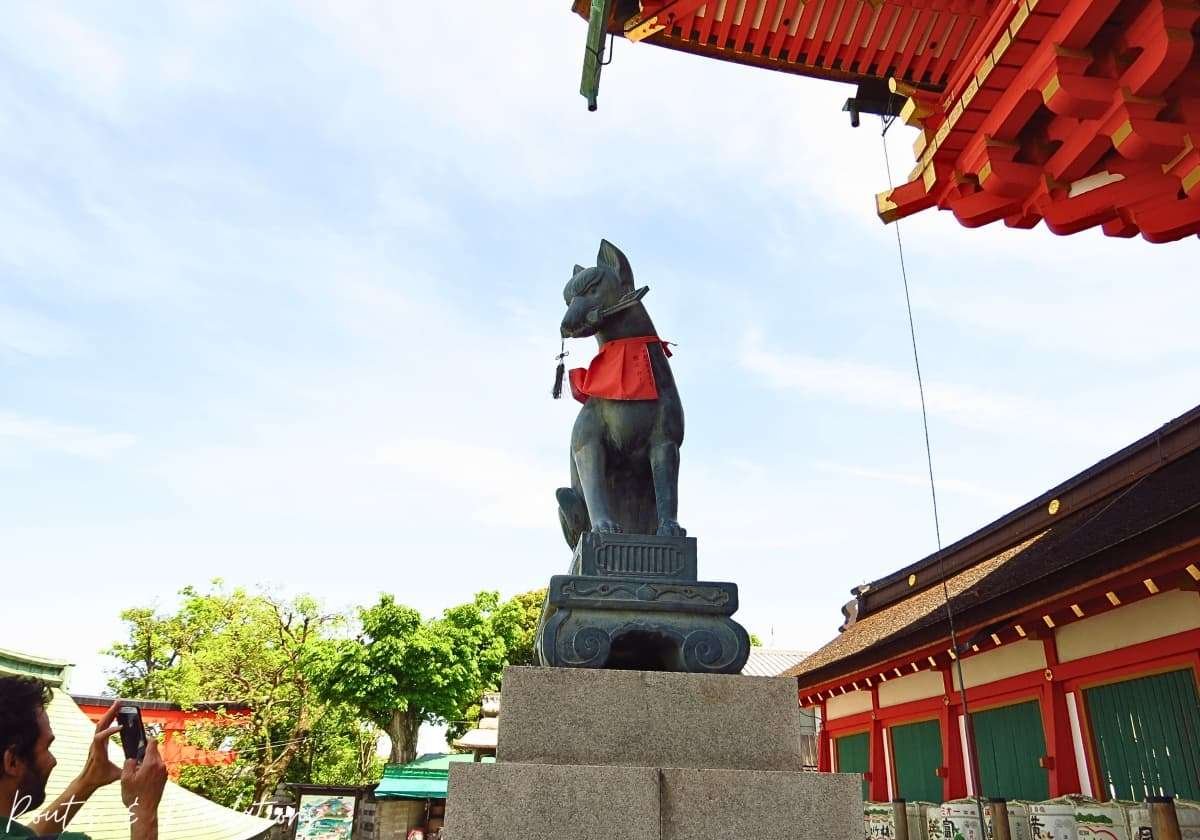
You can’t walk more than a few feet without spotting a stone fox somewhere on the grounds. These foxes, or kitsune, are considered Inari’s messengers, not the deity itself as people often assume. Some are shown holding a key in their mouth, symbolizing the key to a rice granary, while others hold a jewel or a scroll. Look closely at the offerings and you’ll notice fox-shaped ema (prayer plaques) too, which make for a fun detail to photograph if you’re into that sort of thing. These actually make great Japanese souvenirs to pick up at a nearby stall.
Fushimi Inari Shrine Hours, Tickets, and Entrance Fee
Here’s the best part: Fushimi Inari is open 24 hours a day, every single day of the year, and it’s completely free. No ticket booth, no entrance fee, no timed slots. You genuinely just walk in. Free-to-visit shrines is just one of our Japan travel tips in an extensive list.
That around-the-clock access is a big deal for trip planning because it means you’re not boxed into standard shrine visiting hours like you would be elsewhere in Kyoto. Whether you want to catch it at sunrise, midday, or well after dark, the gates are always there waiting.
Guided tours of Fushimi Inari are popular, so book ahead for the top rated ones.
How to Get to Fushimi Inari from Kyoto

Getting here is refreshingly simple. Hop on the JR Nara Line from Kyoto Station and get off at Inari Station, just two stops away and about a five minute ride. The shrine entrance is literally right across the street from the station exit. You genuinely cannot miss it.
If you’re coming from a different part of the city, the Keihan Main Line also stops nearby at Fushimi Inari Station, a short six minute walk to the entrance. Buses run here too, but between the traffic and the ease of the train, we’d skip the bus entirely unless it’s your only option.
The Fushimi Inari Hike: Route, Distance, and Difficulty
This is where most first-time visitors get caught off guard. Fushimi Inari isn’t just a quick photo stop at the front gates. The torii-lined trail continues all the way up Mount Inari, and the full loop covers close to 4 kilometers (about 2.5 miles) round trip, gaining roughly 233 meters in elevation to the summit.
The path is well maintained with stone steps throughout, so you don’t need any technical hiking experience. That said, it is a genuine incline, and Kyoto’s humidity can make it feel tougher than the distance suggests. We’d call it moderate rather than difficult, but pace yourself, especially in summer.
Half Hike vs Full Hike to the Summit

Most tourists never make it past the Yotsutsuji intersection, roughly a third of the way up, where the crowds thin out dramatically and you get your first real view over Kyoto. If you’re short on time or energy, this is a completely respectable turnaround point and you’ll still get the classic experience.
Push on to the summit, though, and you’re rewarded with fewer people, quieter shrines tucked into the forest, and a genuine sense of accomplishment. The upper trail loops back down a different route, so you’re not retracing your steps, which we always appreciate on a hike.
How Long the Hike Actually Takes

Budget about 2 to 3 hours for the full round trip if you’re taking your time, stopping for photos, and maybe grabbing a snack along the way. If you’re just doing the shorter loop to Yotsutsuji, you’re looking at 60 to 90 minutes. If you take the full hike, make sure you do it at an easy pace with plenty of photo breaks and including a rest at the top.
What You’ll See Before You Reach the Gates

Before you get anywhere near the famous tunnel of torii, there’s a proper sequence of shrine buildings worth slowing down for. You’ll first pass through the Romon Gate, a striking two-story vermilion gate donated back in the 16th century, which sets the tone for everything that follows.
Just behind it sits the Gehaiden, the outer worship hall, where most visitors stop to pray and leave offerings before continuing on. It sits directly in front of the Honden, the shrine’s main sanctuary, and it’s also where you’ll see Shinto ceremonies and festivals take place throughout the year if your timing happens to line up. It’s easy to rush past this area on the way to the gates, but it’s worth pausing here first. This is the heart of the shrine before the mountain trail even begins, and it gives the climb ahead a bit more meaning once you understand what you’re walking away from.
What You’ll See Along the Way
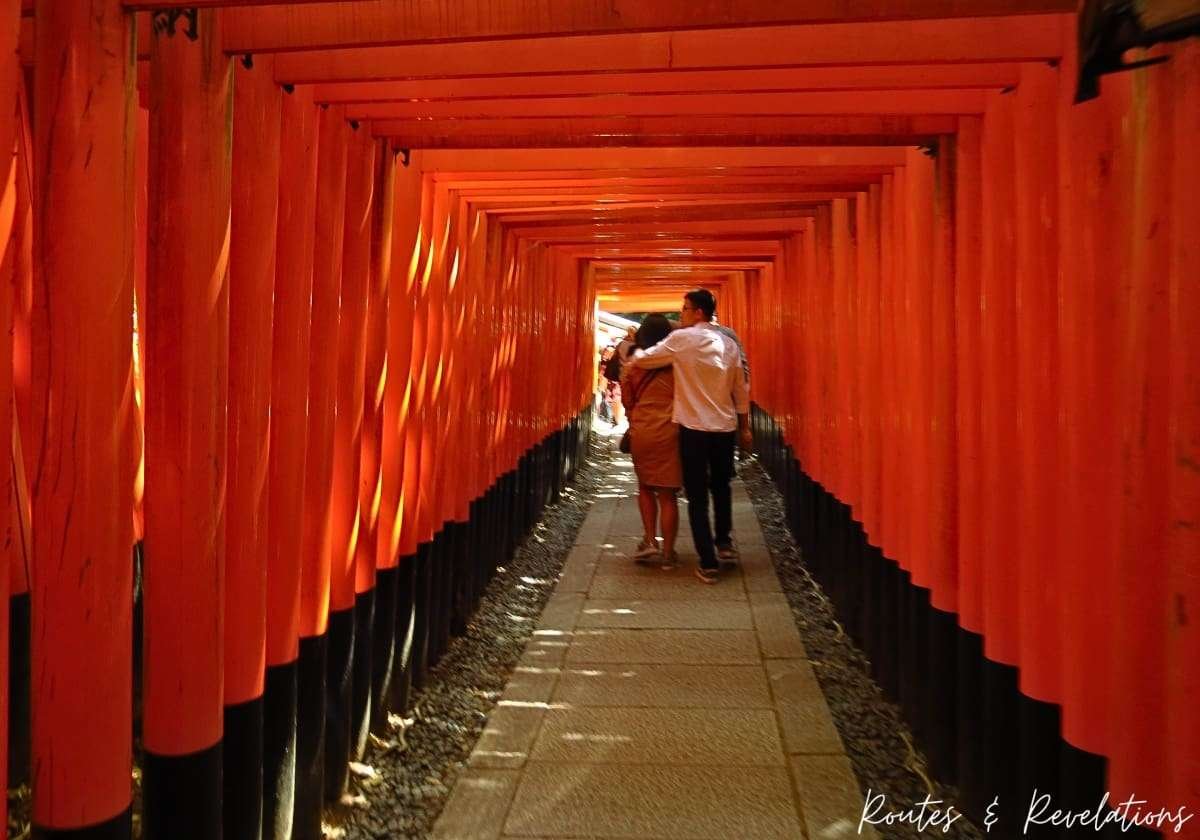
The trail isn’t just gate after gate the whole way up, and that’s part of what makes the hike worth doing. The first stretch near the entrance is the densest and most photographed section, gates packed so tightly they blur into a solid tunnel of orange. Past that, things open up. You’ll pass smaller sub-shrines tucked into the trees, stone fox statues standing guard at odd turns, and countless miniature torii gates left as personal offerings, some barely a foot tall. You’ll also see thousands of Otsuka (personal stone altars dedicated to Inari Okami) just off the trail.
Around Yotsutsuji, the trees part just enough to give you a proper view over Kyoto’s rooftops, a nice excuse to catch your breath. Keep climbing and the crowds fall away almost entirely. The upper trail feels more like a quiet forest hike than a tourist attraction, with mossy stone steps, small teahouses selling snacks, and gates that show real age, weathered and sun bleached compared to the freshly painted ones near the base. It’s a completely different mood up there and worth the effort if you have the time to do it.
What to Wear and Bring

Wear real shoes. Sneakers or trail runners with decent grip are your best bet since the stone steps get worn smooth and can feel slick, especially after rain. Sandals or dressy shoes will make the climb miserable, trust us on this one.
Pack layers if you’re visiting in cooler months since you’ll warm up fast once you start climbing. A small towel or handkerchief is genuinely useful in summer too, since Kyoto humidity is no joke.
Good news if you’re worried about running out of water: vending machines are scattered along the lower and middle sections of the trail, so you’re never too far from a cold drink or a hot one if you’re visiting in cooler months. They thin out considerably past Yotsutsuji though, so stock up before you commit to the summit push. A few also sell snacks and ice cream, which honestly hits different after an hour of climbing stone steps in the Kyoto heat. We’d still recommend carrying at least one bottle of your own so you’re not relying on finding a working machine at the exact moment you need one.
Best Time to Visit Fushimi Inari
Timing your visit well is honestly the single biggest thing that’ll shape how much you enjoy this place. Fushimi Inari is one of Kyoto’s most popular sites, and the crowds at the base can get intense.
Early Morning vs Sunset: Which Wins
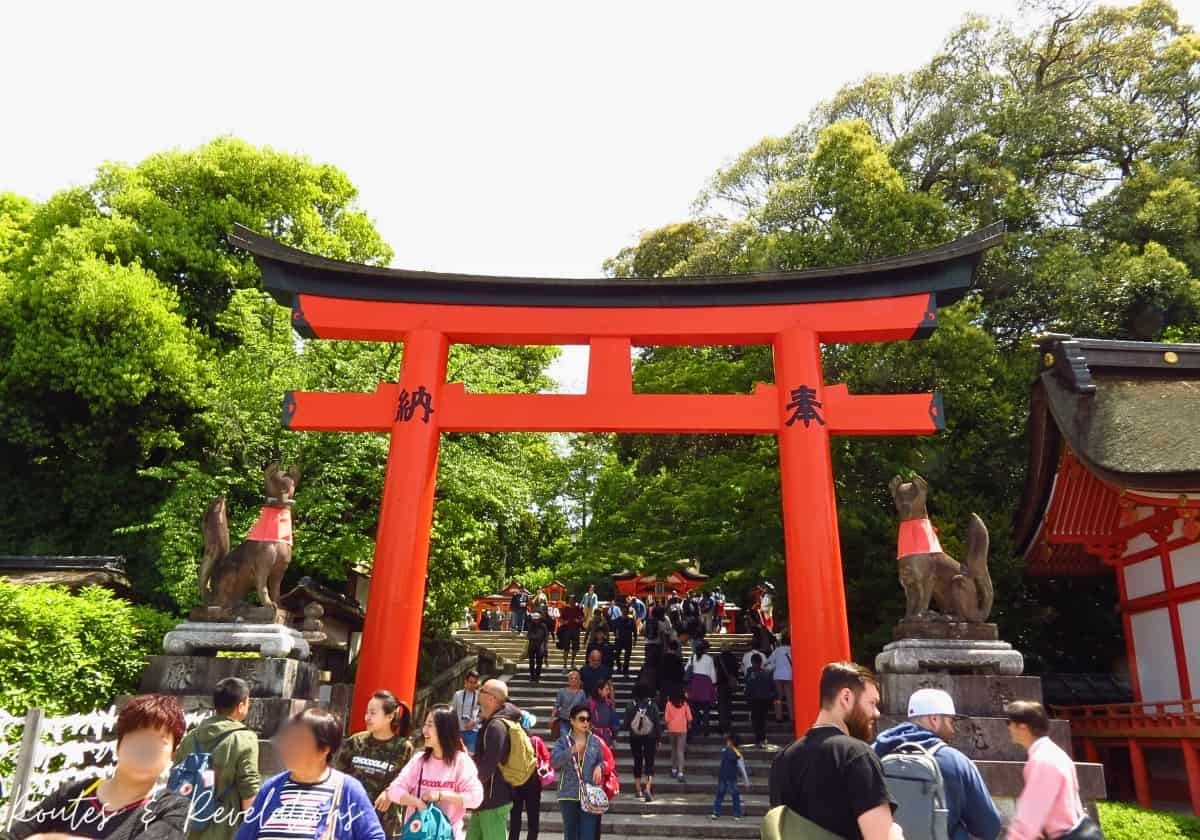
If photography is a priority, get there before 8am. If you get there even before that, you’ll have long stretches of the gates almost entirely to yourselves, which makes for the kind of shots you actually want to frame and put on your wall. By 9am, tour buses start rolling in and it gets noticeably busier near the entrance.
Sunset is the other sweet spot, particularly if you’re planning the full hike. Starting the climb in late afternoon means you catch golden light filtering through the gates on the way up, and the crowds heading down as you climb up work in your favor. Just make sure you’re timing your descent so you’re not navigating unlit sections of trail after full darkness, unless that’s part of the plan.
If you’re visiting Kyoto on a day trip by Shinkansen from Tokyo, then place Fushimi Inari right at the beginning or right at the end of your sightseeing plan. Otherwise, try to get here as early as possible if you’re staying in Kyoto for a few days. Here’s how we would structure 3 days for sightseeing in Kyoto and Nara.
Fushimi Inari at Night
Yes, you can visit at night, and it’s an entirely different atmosphere. Some sections of the lower trail are lit with lanterns, casting a warm, slightly eerie glow through the gates that feels almost otherworldly. It’s quieter, cooler, and genuinely atmospheric.
That said, the upper trail sections get dark and aren’t well lit, so if you’re planning a night visit, stick to the lower loop unless you’re comfortable hiking with a headlamp or flashlight. Go with at least one other person, stay on the main path, and skip it entirely if you’re someone who spooks easily. It is, after all, a shrine dedicated to foxes on a forested mountain at night.
Best Season: Spring vs Autumn
Spring brings mild temperatures and occasional cherry blossoms nearby, though Fushimi Inari itself isn’t primarily known for sakura the way other Kyoto spots are. Autumn, on the other hand, is stunning here. The forested upper trail turns shades of red and gold by mid to late November, and the cooler air makes the hike far more comfortable than the sticky heat of summer.
If you’re flexible, we’d lean toward autumn for the best combination of weather and scenery. Just know that autumn also draws bigger crowds, so pair that season with an early morning visit for the best of both worlds.
Fushimi Inari vs Other Kyoto Shrines and Temples
Kyoto has no shortage of incredible temples and shrines, so it’s fair to ask what makes this one worth prioritizing. Kinkaku-ji (the Golden Pavilion) and Kiyomizu-dera are both stunning, but they’re Buddhist temples and primarily viewing experiences. You walk through, admire the architecture, and move on.
Fushimi Inari is different because it’s participatory and is a Shinto shrine. You’re not just looking at something beautiful, you’re physically moving through it, and that hike up the mountain gives the visit a completely different pace and payoff. It’s also free and open 24 hours, unlike most major temples that charge admission and close by early evening. If you only have time for one major shrine experience in Kyoto, this is the one we’d point you toward.
Tips for Visiting Fushimi Inari
A few practical things that’ll make your visit smoother, gathered from our own trial and error.
Shrine Etiquette You Should Know
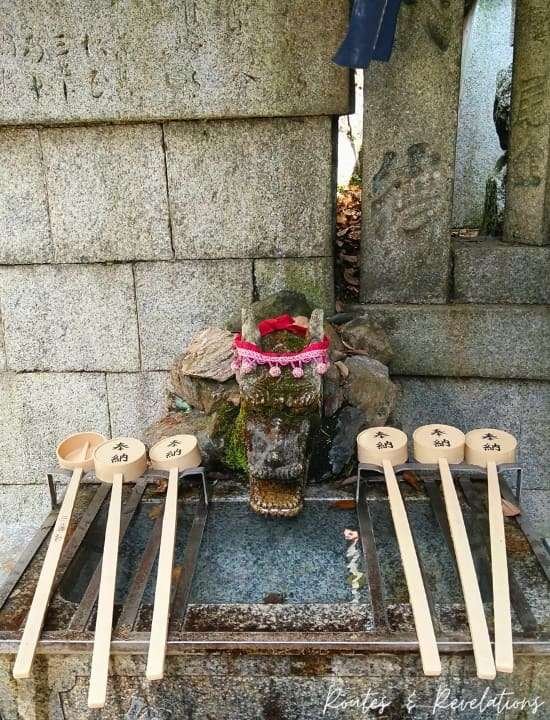
This is an active place of worship, not a theme park, so a little respect goes a long way. If you pass through the main gate structures, it’s customary to bow slightly before entering. At the main hall, a simple bow, two claps, a moment of quiet reflection, and one final bow is the standard way locals pay respects, though nobody expects tourists to get this perfect.
Keep noise levels reasonable, especially near people who are actively praying, and be mindful about blocking pathways for photos when others are trying to move through, particularly in the narrower gate tunnels.
Photography Tips for the Gates
The gates are narrower than they look in photos, so getting a shot without other people in frame takes some patience, especially midday. Early morning solves most of this problem instantly.
For that classic tunnel shot, get low and shoot straight down the row of gates rather than at an angle, it exaggerates the repetition and depth. The lighting changes constantly as you move through dense and sparse sections of gates, so don’t be afraid to stop often. Some of our favorite shots came from unplanned pauses where a shaft of light hit the vermilion paint just right.
Accessibility Notes
Worth flagging honestly: the trail involves a lot of stone steps and inclines, and there’s no elevator or accessible route to the upper sections. The base area around the main shrine buildings is flat and manageable for most visitors, but anyone with mobility limitations should plan to enjoy the lower grounds and skip the climb rather than attempt the full trail.
Should You Book a Fushimi Inari Tour or Go Self-Guided?
Honestly, this shrine is one of the easiest places in Kyoto to visit completely on your own. The signage is clear, the trail is straightforward, and there’s no ticket system to navigate. We went self-guided and never once felt like we were missing context we couldn’t have looked up ourselves beforehand (which, hey, is basically what this guide is for).
That said, a guided tour can add real value if you want deeper historical context delivered in person, or if you’re traveling somewhere you’d rather not navigate solo, like an early sunrise or night visit.
A full day group tour by bus of several major Kyoto sights makes sense if you only have a day in the city and want to see as much as possible. A private tour of Kyoto is even better if you’re a family or visiting as a group. These tours will definitely include a guided walking tour for at least the route up to Yotsutsuji.
Best Tours for Different Travelers
- Families: Look for shorter guided walks that stick to the lower loop, keeping little legs from tiring out on the steeper upper sections.
- Solo travelers: A small group walking tour is a nice way to meet other travelers while still getting expert commentary.
- Couples and photographers: Sunrise, sunset, or night tours tend to be smaller and more intimate, with better light for photos together.
- Seniors: Private tours let you set your own pace and skip the steepest sections entirely if needed.
- Students or budget travelers: Group walking tours are typically the most affordable guided option, and honestly, self-guided works just as well if you’ve read this far.
If you do want to book ahead, sunrise tours are particularly popular for beating both the heat and the crowds, so reserve early if that’s the plan.
What to See Near Fushimi Inari
Once you’ve made it back down, the area right around the station has a handful of small food stalls worth grabbing a bite from, particularly the inari sushi (sweet fried tofu pockets stuffed with rice) which feels like the appropriately on-theme snack given where you just were.
This part of the city, Fushimi-ku, connects easily onward if you’re planning a broader trip. If you’ve got three days to explore both Kyoto and Nara, Fushimi Inari fits naturally into that itinerary as your first stop before continuing on, since Nara’s own deer park and Todai-ji temple or Arashiyama’s bamboo grove, monkey park and scenic river make for a perfect day trip pairing. We’ve mapped out the full route in our Kyoto and Nara itinerary guide, if you want the bigger picture, and a detailed day trip itinerary for Nara.
Final Thoughts
We went into Fushimi Inari expecting a quick photo stop and left having spent a few hours there, completely won over. There’s something about walking through gate after gate, watching the light shift, that photos really can’t capture. Give yourself more time than you think you’ll need, show up early if photography matters to you, and wear shoes you don’t mind sweating in. You’ll thank yourself later.

