
Last updated on June 7th, 2026
Tokyo will overwhelm you with choices before you even leave your hotel. There’s a tower here, a skyscraper rooftop there, and about a dozen listicles online that contradict each other completely. I know because we spent weeks planning our Tokyo itinerary and kept going in circles on this exact question.
If you’re trying to figure out the best Tokyo views for your trip, whether that means Shibuya Sky or Tokyo Skytree or Tokyo Tower, or something else entirely, this guide cuts through the noise. I researched all three of the big paid decks and everything else thoroughly, and what follows is the honest, practical breakdown I wish I’d had before we went.
There’s something here for every kind of traveler: free options that genuinely rival the paid ones, hidden gems most tourists walk straight past, rooftop bars for those who’d rather have a drink with their panorama, and a clear verdict on which spot deserves your time and money.
Jump to ...
Tokyo Observation Decks at a Glance
Before we get into the detail, here’s a quick-reference table covering every major option in this post. Use it to get a quick overview of what suits your itinerary, budget, or travel style.
| Viewpoint | Neighborhood | Height | Free or Paid | Pre-booking | Best For |
|---|---|---|---|---|---|
| Tokyo Skytree | Oshiage | 350m / 450m | Paid | Recommended | Height, first-timers |
| Shibuya Sky | Shibuya | 229m | Paid | Yes (essential) | Sunset, photography, couples |
| Tokyo Tower | Shiba/Minato | 150m / 250m | Paid | Not required | Nostalgia, night views |
| Tokyo City View (Roppongi Hills Mori Tower) | Roppongi | 250m | Paid | Not required | Culture + views, couples |
| Tokyo Metropolitan Govt Building | Shinjuku | 202m | Free | No | Budget travelers, night owls |
| Sunshine 60 Tenbou-Park | Ikebukuro | 240m | Paid | Recommended | Families, kids, budget travellers |
| Yebisu Garden Place Tower | Ebisu/Daikanyama | 160m | Free | No | Couples, neighborhood views, casual evenings |
| Asakusa Culture Tourist Info Center | Asakusa | 39m | Free | No | Temple views, photographers |
| Caretta Shiodome | Shiodome | 200m | Free | No | Spontaneous visits |
| Bunkyo Civic Center | Bunkyo | 105m | Free | No | Skytree views, quiet escape |
| I-Link Town Observation Deck | Ichikawa, Chiba | 150m | Free | No | Budget travellers, unique angle on skyline |
Recommended Tickets:
Tokyo Tower admission tickets for Main or Top Decks
Tokyo Skytree admission tickets for just the Tembo Deck and/or Tembo Galleria, or in combination with one of TeamLab Planets, Sumida Aquarium
Shibuya Scramble Square Shibuya Sky admission tickets
Roppongi Hills Observation Deck Tokyo City View admission tickets
Sunshine 60 Observatory Tenbou-Park admission tickets for all ages
Best Tokyo Observation Decks
Tokyo Tower – The Icon Worth Climbing

What Tokyo Tower Actually Is (and Why It Still Matters)
When Tokyo Tower went up in 1958, it was the tallest structure in Japan. It was modelled loosely on the Eiffel Tower, painted in that unmistakable red-orange and white, and it became the city’s skyline symbol almost overnight. Decades later, the Skytree took the height crown and everyone assumed Tokyo Tower would fade into background noise. It didn’t.
There’s something about Tokyo Tower that the newer, taller options can’t replicate. It’s not just the history or the iconic color, though both matter. It’s the fact that this tower feels genuinely embedded in the city’s identity in a way that a glass-and-steel supertall never quite does. The Tokyo Tower illuminations at night, shifting colors with the seasons and marking national events, is still one of the most beloved sights in the city. We walked past it unexpectedly one evening and genuinely stopped in our tracks.
Tokyo Tower Views and What to Expect
Tokyo Tower sits in the Shiba area of Minato ward, surrounded by low-rise residential streets, embassies, and one remarkable surprise: Zojo-ji Temple directly in front of it. That temple-in-foreground, tower-above composition is one of the most photographed scenes in Tokyo, and for good reason. It’s also a neighborhood that pairs beautifully with Roppongi Hills if you’re planning an efficient evening.
From the observation deck itself, the views are genuinely impressive. The Main Deck sits at 150m, while the Top Deck – a separate, premium experience – reaches 250m. You can see the Skytree from up here and feel a sense of scale that you don’t get when you’re standing on the Skytree itself.
The Tokyo Tower night view is one of the city’s best. The illuminated tower structure frames your photos from the outside, the city glows below, and on a clear night you can pick out the Skytree’s blue-white spire in the distance. Day views are lovely, but honestly, this one earns its reputation after dark.
Tickets, Pricing and Tips for Tokyo Tower
The Main Deck costs around ¥1,500 for adults, and the Top Deck with Main Deck, which includes a guide and a more premium experience, runs around ¥3,300 if bought online but a little more at the ticket counter. If you’re going to go, the Top Deck is worth the upgrade.
Unlike Shibuya Sky, you don’t need to book far in advance. Walk-ins are generally fine except on public holidays. That said, going online to grab a Tokyo Tower night ticket for a specific evening slot isn’t a bad call if you’re visiting during peak season. Weekday evenings are quieter and the city lights up beautifully.
Tokyo Skytree – The Tallest View in Japan
Tokyo Skytree Overview
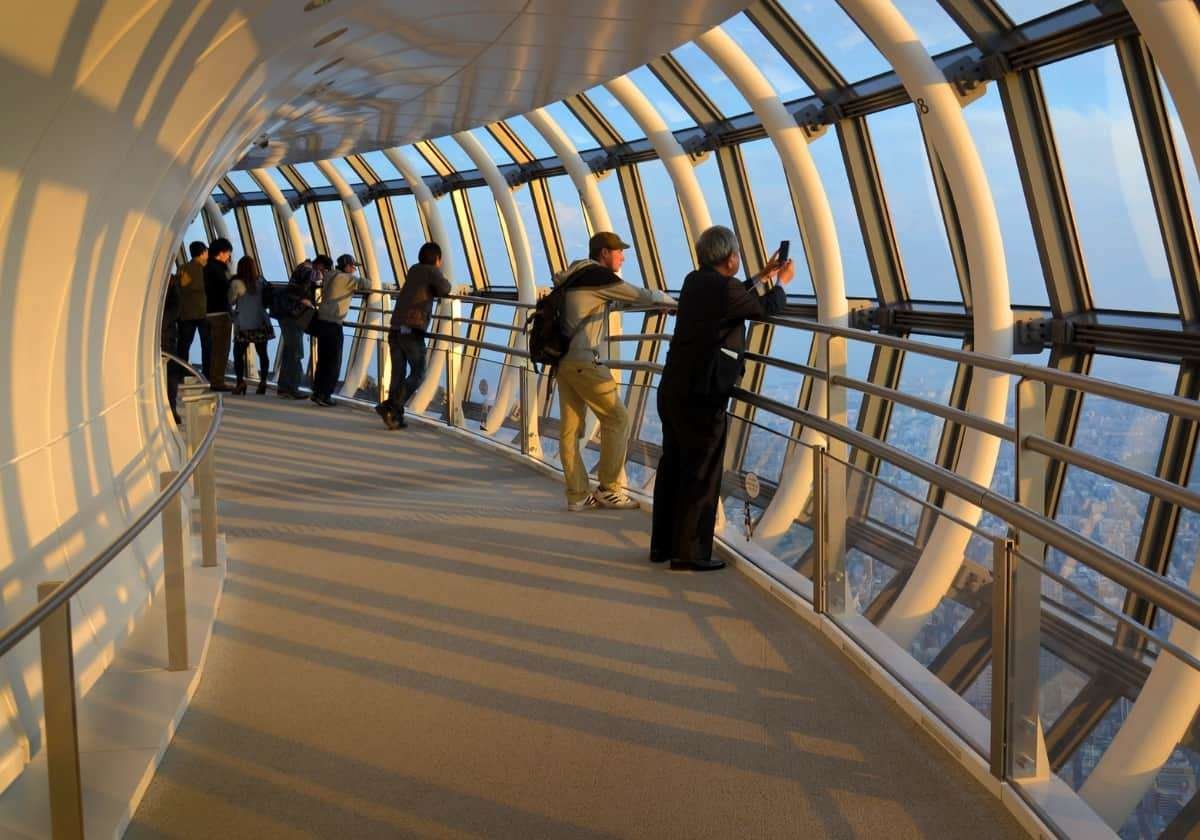
Tokyo Skytree is, by some distance, the tallest structure in Japan and one of the tallest in the world. It stands at 634 meters – a number chosen deliberately because in old Japanese, 6-3-4 can be read as “mu-sa-shi,” the historical name for the region. That kind of detail is very Tokyo.
The tower is in Oshiage, close to Asakusa, and the complex around it is enormous. There’s a Tokyo Skytree shopping mall at the base (Solamachi), a Tokyo Skytree aquarium, restaurants, and enough to keep a family busy for a full afternoon even without going up. The observation experience is split across two decks: the Tembo Deck at 350m and the Tembo Galleria at 450m, a spiralling glass corridor that makes the extra height feel genuinely vertiginous.
Is Tokyo Skytree Worth It?
Honestly? Yes, with caveats. The view from 350m is extraordinary. On a clear day, the city unfolds in every direction in a way that’s almost abstract. You stop recognizing it as a city and start seeing it as a pattern. The Tokyo Skytree height is staggering, and the sense of elevation is something none of the other decks can match.
But it’s also the most expensive and the busiest. The crowds can be significant, especially on weekends, and the full glass enclosure, while practical, removes the open-air feeling that makes Shibuya Sky so memorable. Night views here are dramatic but, in my view, slightly less atmospheric than Tokyo Tower after dark. That said, for a first visit to the city, there’s an argument that coming up here once is simply something you should do. It’s a genuine landmark experience.
Tokyo Skytree vs Tokyo Tower – Height, Views and Cost
This comparison comes up constantly, so let’s settle it plainly.
Height: Skytree wins by a huge margin – 450m vs 250m at the top. The difference in perspective is real and noticeable.
View character: From the Skytree, you see Tokyo as a vast, almost infinite grid. From Tokyo Tower, the city feels more intimate and you can see the Skytree itself, which adds an interesting spatial dimension.
Cost: Tokyo Tower is quite a bit cheaper, especially if you stick to the Main Deck. The Skytree’s full experience (both decks) can run ¥3,000+ per adult.
Neighborhood: Oshiage is charming and Asakusa is nearby, which makes the Skytree easy to fold into a traditional-Tokyo day. Tokyo Tower’s Minato location works better for combining with Roppongi or a waterfront evening.
For first-timers: Both are worth considering, but if you’re only doing one paid tower, the Skytree’s sheer scale and the immersive Tembo Galleria experience give it a slight edge.
Tokyo Skytree Tickets, Fast Pass and Booking Tips
Tokyo Skytree ticket prices vary by day and season. Expect to pay around ¥2,000 to ¥3,200 for the Tembo Deck and an additional ¥1,000 or so for the Tembo Galleria, depending on the season or how close to your date you are. Buying Tokyo Skytree tickets online in advance is strongly recommended – it lets you choose a time slot and skip the queue, which can be genuinely long on busy days and during cherry blossom season and autumn.
Keep in mind, however, that tickets are non-refundable or changeable if you run into poor visibility or rain, unless the viewing decks themselves need to be closed.
Shibuya Sky – Tokyo’s Most Photogenic Rooftop
What Is Shibuya Sky?
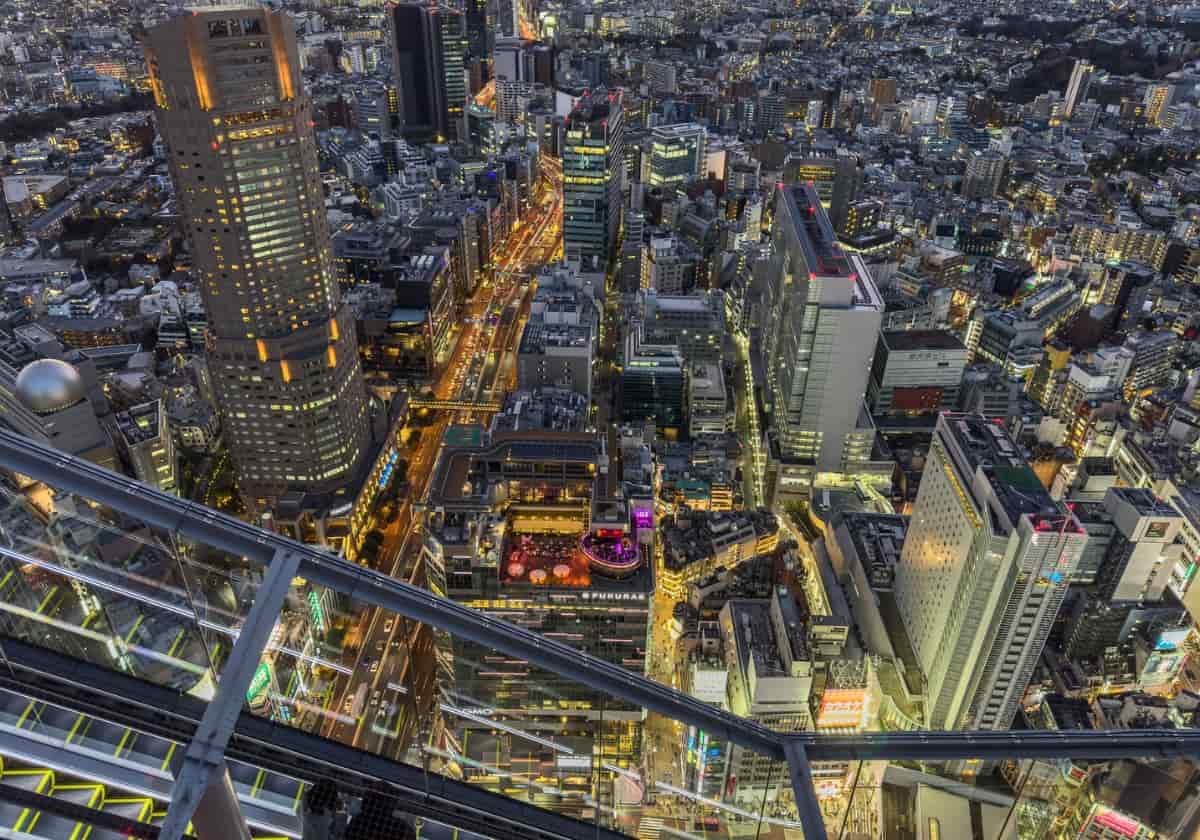
Shibuya Sky sits on top of Shibuya Scramble Square, the skyscraper built directly above one of the world’s most famous intersections. When you’re up there, you’re not just above Shibuya – you’re above the Scramble crossing itself, watching thousands of people flow in and out of the crossing below like a live ant colony. It’s hypnotic.
What makes Shibuya Sky architecturally different from every other deck in this post is that it’s genuinely open-air. You’re not behind glass. You’re standing on a rooftop at 229 meters with the wind in your face and a 360-degree Tokyo panorama around you. That distinction matters enormously, both for atmosphere and for photography.
The Glass Floor, the Rooftop and the Experience
The experience is divided into three zones. You start with an indoor transition space, then move up to the main open-air rooftop where the full panorama opens up. There are net hammock-style loungers you can lie back in and look straight up at the sky – genuinely one of the more unusual things I’ve done on a trip. There’s also a Shibuya Sky glass floor section where you look directly down at the streets below, which is either thrilling or terrifying depending on who you are.
Wind is a real factor up here. On blustery days the staff may restrict access to certain areas, and it can be cold even in mild weather. Dress accordingly. But that exposure is also the point – it’s what makes Shibuya Sky feel alive in a way enclosed towers simply don’t.
Photography here is exceptional. No glass barrier means no reflections, no distortion, and no need to press your lens awkwardly against a window. The Scramble crossing below, the low cityscape of Shibuya, including the dense forest cover around Meiji Shrine stretching south, and the towers of Shinjuku and the Skytree on the horizon all make for genuinely compelling compositions.
Read more: Our guide to the nearby historic Meiji Shrine. It is a must-visit.
Best Time to Visit Shibuya Sky
Sunset and nighttime are when Shibuya Sky is at its absolute best. The light comes in warm at sunset from the west, the city transitions from golden to electric, and the Scramble crossing below gets busier as the evening rush starts. Once it starts to get dark, the city’s twinkling lights come on and there’s even a light show to enjoy. These times are two of the more romantic settings you’ll find at a Tokyo observation deck.
The best time to visit Shibuya Sky for sunset shifts through the year, so check the local sunset time and book a time slot that starts about 30 minutes before. If you prefer an after dark experience, make sure you don’t pick a slot too early. During cherry blossom season, Yoyogi Park is visible to the north and offers a pink-tinged bonus in the cityscape. Meguro River, a popular sakura spot, sits just south. It adds an extra layer to an already beautiful view.
Shibuya Sky Tickets and How to Book in Advance
The Shibuya Sky entrance fee is ¥2,700 for adults entering before 3pm and ¥3,400 for adults later and until closing time. Children’s tickets for 6-12 years old can be purchased only at the ticket counter on the day of your visit. Unlike Tokyo Tower, pre-booking here is essentially non-negotiable for popular time slots, especially sunset and nighttime windows, weekends, and any time during cherry blossom or autumn foliage season.
Buy Shibuya Sky tickets online through the official website or Klook up to 2 weeks in advance. Time slots fill up fast once your window opens. Shibuya Sky last minute tickets do sometimes appear if cancellations come through, but don’t count on it for peak periods – only for a few slots earlier in the day. If you can’t find just admission tickets, you may find tour sellers bundling tickets for popular times slots with a guided walking tour around the vicinity, like the following:
Tokyo Metropolitan Government Building – The Best Free View in Tokyo
What to Expect from the Observation Rooms
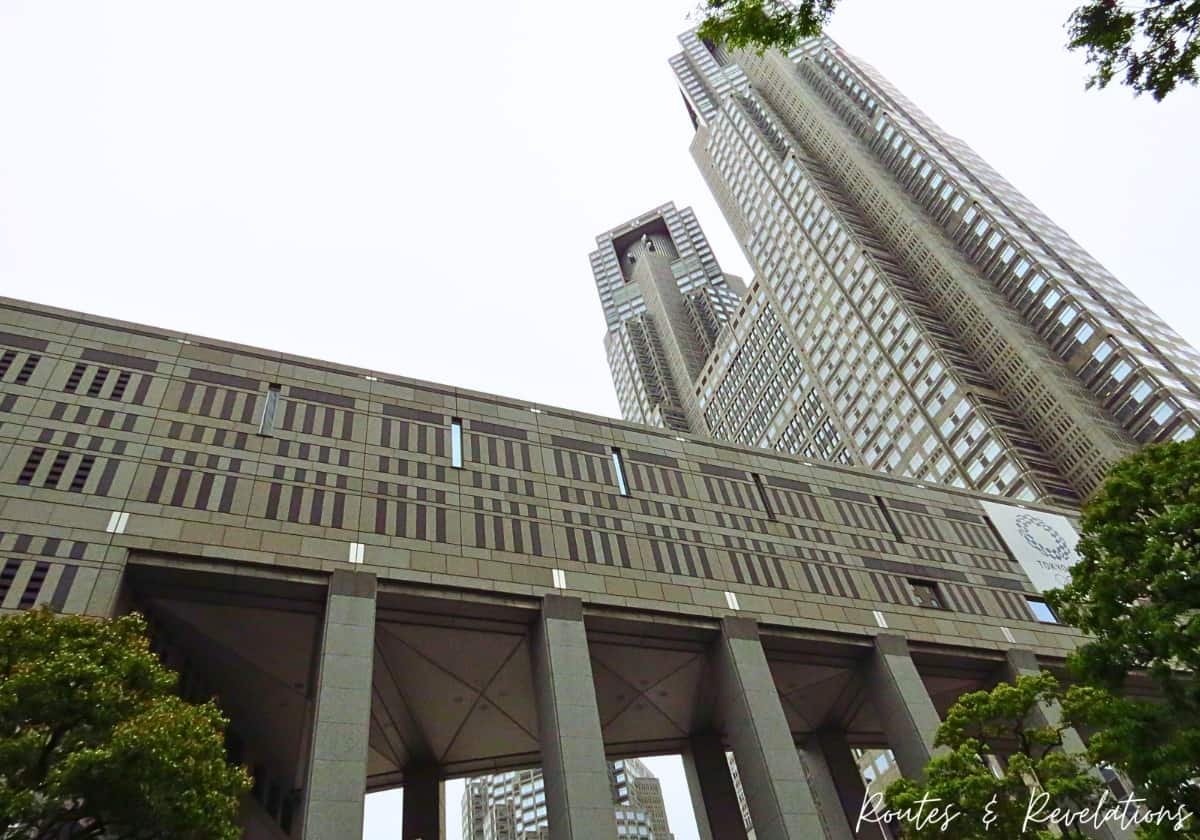
Here’s the thing about the Tokyo Metropolitan Government Building: it’s free, in the heart of Shinjuku, open most evenings, and it offers a panoramic view that a lot of paid decks would be happy to charge ¥2,000 for. It’s not flashy. The interior is functional, a bit dated, and there’s no gift shop trying to sell you a Skytree keyring. But the view? The view is outstanding.
The building has two towers, each with an observation room at 202 meters. The South Tower stays opens until 10:30pm most nights, making it one of the best options for a late-evening Tokyo cityscape without spending a yen. On a clear night, the city stretches from the Skytree in the east to the mountains in the west, and on exceptional winter mornings, Mount Fuji appears on the horizon.
One tower is sometimes closed for maintenance on a rotating basis, so it’s worth checking the schedule before you go. But in practice, at least one is almost always open.
Once it turns dark, there’s a 15 minute projection show on the building every 30 minutes and until 9:30pm everyday. You can catch any of them from various spots around the building.
Where It Sits and What’s Nearby
The building sits a short walk from Shinjuku Station’s west exit, which makes it one of the most accessible viewpoints in the city. That’s a genuinely useful combination: you can do the observation rooms in the early evening and move straight into a Shinjuku night. It slots into an evening itinerary with zero friction.
Is the Tokyo Metropolitan Government Building Worth It?
For budget travelers, it’s not even a question – this should be on every itinerary. But even if you’re doing any of the paid decks, this one deserves a visit. The view north and west from here is different from what you get at Shibuya Sky or the Skytree, and at night the city spreads out with a slightly different character. Other skyscrapers sit close to the left or right of you. Photographers will want to visit in the blue hour – that window just after sunset when the sky goes deep indigo and the city lights glow against it. No ticket required. No queue. Just go.
Tokyo City View – Why Roppongi Hills Earns Its Ticket Price
Tokyo City View and Sky Deck Explained
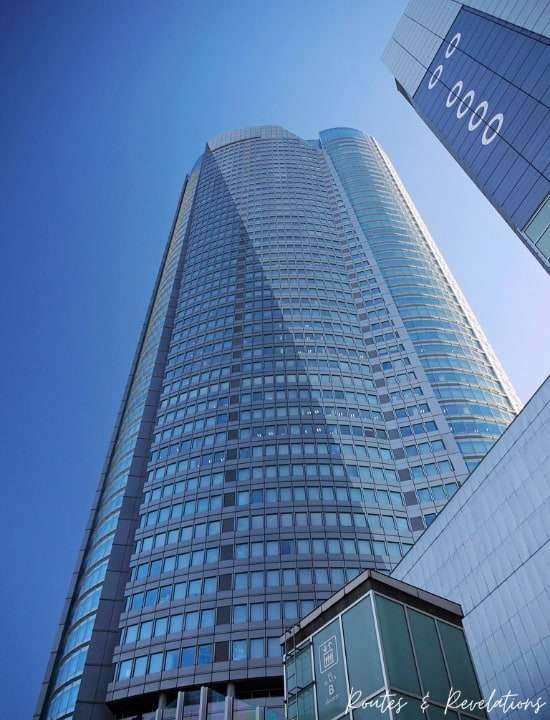
Roppongi Hills Mori Tower houses Tokyo City View, an indoor observation floor at 250 meters. There used to be a higher outdoor Sky Deck but that has been permanently closed. Don’t let that discourage you from considering this tower for your viewing experience. The indoor floor is polished and well-maintained, with floor-to-ceiling glass on all sides. It’s genuinely impressive.
The Roppongi Hills View – What Makes It Different
Here’s the composition that sets this place apart: Tokyo Tower sits almost directly in front of you, glowing orange against the night skyline. It’s one of the most photogenic viewpoints in the entire city, and it’s one that most visitors don’t think of until they’re standing there.
Tokyo City View also offers clear sightlines toward Tokyo Bay to the south, which is rarer than you’d expect from a central Tokyo viewpoint. On clear days, the bay stretches out with Rainbow Bridge visible in the distance. For photographers specifically, this is one of the most dynamic and varied panoramas in the city – Tokyo Tower in the foreground, Skytree on the horizon, bay to one side, Shinjuku towers in the other direction.
Combining Tokyo City View with the Mori Art Museum
The practical case for spending a serious chunk of time here: the Mori Art Museum occupies the upper floors of the same tower. It’s one of Tokyo’s best contemporary art spaces, with rotating international exhibitions that are consistently strong. Combine the museum with the observation deck and you have an easy two-to-three hour experience.
Tickets for Roppongi Hills and How to Book
You have to pre-book online tickets to the City View and you can do so up to around a month in advance. An adult ticket costs ¥2,200 from the official website, but you can sometimes find good discounts on Klook or GetyourGuide:
Where Roppongi Hills Fits in Your Itinerary
Roppongi’s reputation is primarily built on its nightlife, but the neighborhood has genuinely evolved. Roppongi Hills itself is a self-contained slice of upscale Tokyo – restaurants, cafes, design shops, and public art installations scattered through the complex. For an evening that combines culture, a world-class view, dinner, and a walk through a beautifully designed urban space, Roppongi Hills is hard to beat. Pair it with Tokyo Tower for a Minato-focused day and you’ll have seen two of the city’s most distinctive viewpoints in a single itinerary swing.
Sunshine 60 Observatory Tenbou-Park (Ikebukuro)
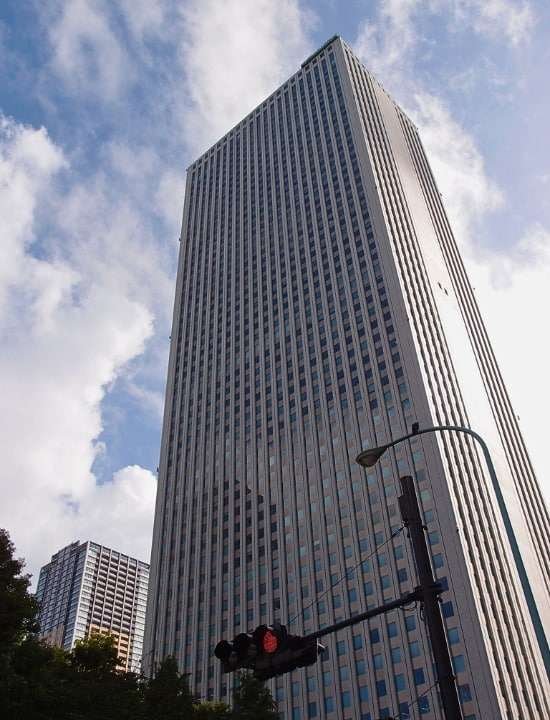
Sunshine 60 in Ikebukuro was Tokyo’s tallest building when it opened in 1978, and the observatory at the top has been refreshed in recent years into what’s now called Tenbou-Park – a themed, playful space at 251 meters with interactive installations alongside the city views. It’s not the most sophisticated observation deck on this list, and the view, while genuinely good, it’s not free and doesn’t quite match the drama of the Skytree or the open-air magic of Shibuya Sky. But that’s not really the point.
Where Sunshine 60 Does and Does Not Work
What Tenbou-Park does well is family friendliness. The interactive elements give kids something to engage with beyond just looking out of windows, the ticket price is noticeably lower than the major decks in the non-busy season, and Sunshine City, the enormous mall complex it sits within, means there’s plenty to do before and after. Aquarium, shops, food court, arcade: the whole building is essentially a self-contained family day out with an observation deck on top. If you’re travelling with children and watching the budget, this is a solid and underappreciated option. Ikebukuro itself is a lively, local-feeling neighborhood that most tourists overlook entirely.
On the other hand, I wouldn’t choose this one if you’re not traveling with young kids or if you’re visiting in the busy or peak seasons – ticket prices increase then, which does not make this option that much cheaper than the better paid options.
Tickets and How to Book
The entrance ticket is ¥700 for adults on weekdays and ¥900 on weekends, but expect to pay more in the busy seasons and even more in peak season, although elementary and middle school kids pay less and preschoolers enter for free.
Hidden Gem Viewpoints Most Tourists Skip
Yebisu Garden Place Tower Observation Deck (Ebisu)
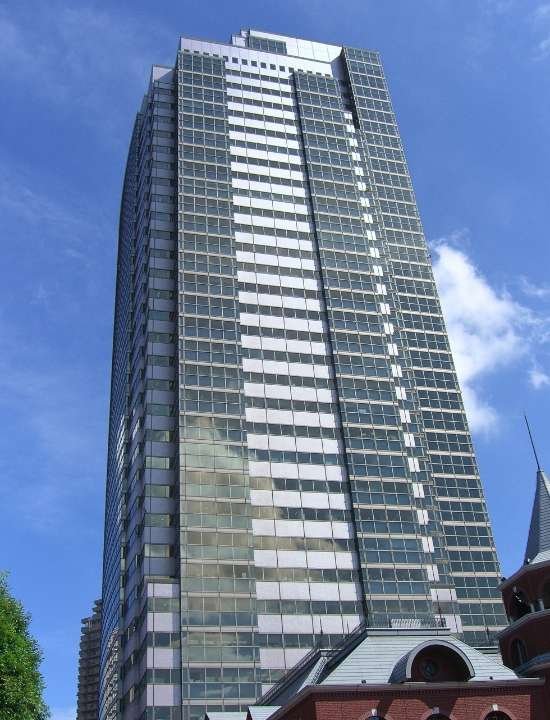
The 38th floor of the Yebisu Garden Place Tower has a free public observation deck – no ticket, no bar minimum, just walk in. At 160 metres, the views take in the low-rise residential spread of Ebisu, Daikanyama and Nakameguro directly below, with the Shinjuku towers visible to the northwest and the Skytree on the horizon to the northeast. It’s a quieter, more neighborhood-level perspective than the supertall decks, and that’s exactly what makes it appealing.
The Ebisu Sky Lounge sits on the same floor – if you want to extend the visit over a drink, it transitions seamlessly from a free observation stop into a relaxed bar evening without you needing to go anywhere. The Yebisu Garden Place complex around the tower is worth lingering in too: it’s a converted Sapporo brewery site with a small beer museum, restaurants, and a Mitsukoshi department store. For an easy, no-cost evening view in one of Tokyo’s most pleasant neighbourhoods, this is a genuinely underrated stop.
Asakusa Culture Tourist Information Center
This one genuinely surprised me when I researched it. The Asakusa Culture Tourist Information Center – the angular building directly across from the Kaminarimon Gate – has a free rooftop terrace on the 8th floor. And from it, you look straight down onto the Senso-ji Temple complex, the Nakamise-dori shopping street, and the traditional rooflines of Asakusa below.
It’s a completely different category of view from the high-altitude panoramas elsewhere in this guide. It’s low, intimate, and almost entirely crowd-free. For photographers, the framing of one of Tokyo’s most iconic temple complexes from above, without the glass and crowds of a paid deck, is something genuinely special. Worth ten minutes of your Asakusa morning after you actually visit the Senso-ji temple complex.
Caretta Shiodome
Caretta Shiodome is a free observation space in the Dentsu building in Shiodome, at around the 46th floor. The views cover the bay area and Hamarikyu Gardens, and the setting is noticeably quieter than the major decks. In winter, the atrium below hosts illumination displays that are visible from the observation level, which makes it a nice added bonus for evening visits.
It’s a natural fit if you’re spending an afternoon at Hamarikyu Gardens or exploring the Tsukiji outer market area nearby. No ticket, no queue, walk straight in.
Bunkyo Civic Center
Another government building, another free observation room – and this one’s in the Bunkyo ward, which means most tourists simply don’t end up here. The deck sits at 105 meters, which sounds modest compared to the major towers, but the view northeast gives you a clean line of sight toward the Skytree, and on clear days you can see toward Nikko in the distance.
It’s a genuinely good backup option for budget travelers looking for views in this area, and for photographers wanting a mid-height perspective that frames the city differently from the supertall decks. Open until 10:30pm, free, and almost always quiet.
I-Link Town Observation Deck (Ichikawa, Chiba)
Most Tokyo view guides stop at the city limits. I-Link Town sits just across the border in Ichikawa, Chiba – about 30 minutes from central Tokyo on the Sobu Line – and it’s one of the best free observation decks in the wider metro area. The 45th floor deck looks back at the Tokyo skyline from the east, which gives you a perspective you simply can’t get from within the city itself. The Skytree, Tokyo Tower, and the Shinjuku skyscraper cluster all appear together in one wide panorama, and because you’re outside the city looking in, the composition has a clarity that the central decks can’t offer.
It’s free, almost never crowded, and genuinely worth the short detour if you’re curious about seeing Tokyo from a different angle. Good option if Skytree tickets are sold out and you still want that eastern skyline view, just from farther out – you’ll actually see the Skytree rather than standing on top of it.
Shibuya Sky vs Tokyo Skytree vs Tokyo Tower – Which One Should You Visit?
Best for First-Timers
Go to Tokyo Skytree. The scale is simply unmatched – standing on the Tembo Galleria at 450 meters and looking out over a city of 14 million people gives you a sense of Tokyo’s sheer size that nothing else replicates. The neighborhood around Oshiage is easy to navigate, Asakusa is a short walk, and the complex at the base keeps the full day interesting. It’s the one experience that consistently earns a “that was worth it” from visitors who are new to the city.
Best for Photographers
Shibuya Sky wins for most photographers, and Roppongi Hills Sky Deck is a strong second. The open-air deck of the former removes the glass problem entirely – no reflections, no distortion – and the compositional variety (Scramble crossing below, Shinjuku towers on the horizon, open sky above) gives you a huge amount to work with. The Roppongi Hills Sky Deck’s Tokyo Tower framing is, in my view, one of the single best photography compositions in the city. For a more intimate shot, the Asakusa Culture Tourist Information Center rooftop offers a completely different visual register.
Best for Couples
Shibuya Sky at sunset or at night is the romantic peak of Tokyo’s observation deck scene. The open-air setting, the warm light, the city glowing below – it’s the kind of view that makes a trip memorable. Roppongi Hills is a close second, especially with the Mori Art Museum visit built in. For budget-conscious couples, the Tokyo Metropolitan Government Building at night is genuinely lovely and costs nothing.
Best for Families and Kids
Tokyo Skytree is built for families – the shopping mall, aquarium, restaurants, and the sheer wow factor of the height all work together. Kids respond viscerally to 450 meters. The glass floor at Shibuya Sky and Tokyo Tower are also reliable crowd-pleasers for younger visitors. The Skytree’s Solamachi complex gives parents the most flexibility if kids need a break from the view.
If budget is a factor, Sunshine 60 Tenbou-Park in Ikebukuro is worth knowing about – lower ticket prices than the major decks, interactive installations that keep kids engaged, and the entire Sunshine City complex downstairs to fill the rest of the day.
Best Value Observation Deck in Tokyo
The Tokyo Metropolitan Government Building is unbeatable on pure value – free, open late, and the panorama is genuinely excellent. If you’re paying, Tokyo Tower’s Main Deck at around ¥1,200 offers a classic Tokyo cityscape at a reasonable price. Sunshine 60 Tenbou-Park is lower priced, except in peak season, and adds kid-friendly interactives that justify the cost for families. For the full premium experience, Shibuya Sky justifies its cost through the open-air setting and sunset quality better than any of the others.
Best for Night Views
Shibuya Sky is electrifying after dark when the Scramble crossing is at full flow below. The Tokyo Metropolitan Government Building offers a free night view that competes comfortably with the paid options – especially pointing west toward Mount Fuji’s dark silhouette and east toward the Skytree’s tower lights.
If you don’t want a night view from the top of a tower, but rather from the ground, Tokyo Tower transforms at night in a way that surprises a lot of people. The illuminations, the warm glow of the city below, and the visual contrast with the darker residential areas of Minato make for one of the most atmospheric night panoramas in the city. The large 15-minute projection mapping display on the facade of the Tokyo Metropolitan Government Building is well worth seeking out at night in Shinjuku. The themes range from Tokyo’s history to Godzilla, and the show is completely free and runs every 30 minutes.
Where to See Mount Fuji from Tokyo
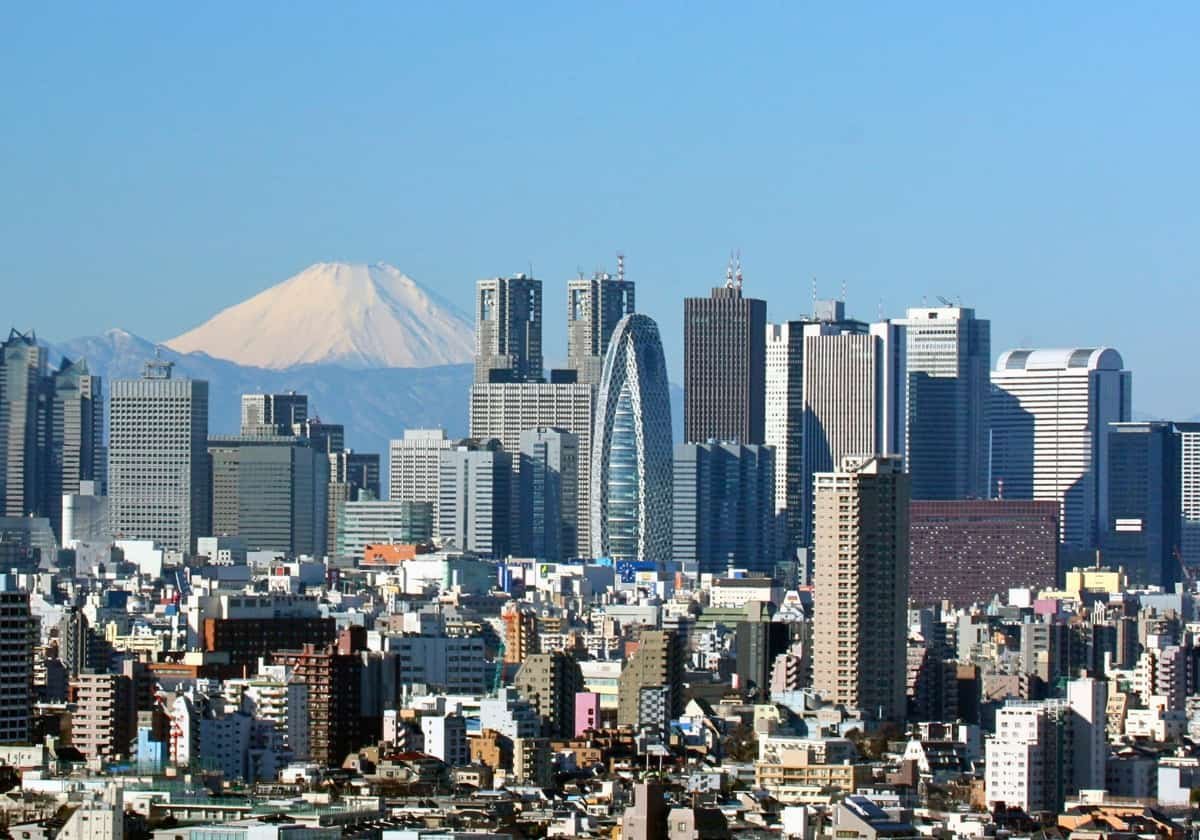
On a clear day – most likely between November and February, though spring brings some good windows too – Mount Fuji is visible from several of Tokyo’s higher points. The key is knowing which direction to look (west-southwest) and going early in the morning before haze builds.
The Tokyo Metropolitan Government Building in Shinjuku is consistently cited as one of the best central Tokyo spots for a Fuji sighting – the west-facing windows frame it when conditions are right. The Bunkyo Civic Center also offers a pretty good sightline toward the mountain with the skyscrapers of Shinjuku in the foreground. Of the paid decks, Tokyo Skytree gives you the best odds because of the sheer altitude – on an exceptionally clear day the view from 350m+ is remarkable.
Practically, arrive as early as the deck opens, go on a weekday after a cold front has cleared the air, and check a Fuji visibility forecast the night before – dedicated apps and websites exist specifically for this purpose, and locals use them religiously.
Seeing Mount Fuji from Tokyo doesn’t mean you should skip seeing it from somewhere closer. Find out how to include beautiful spots, like the area around Mt. Fuji, along with the big tourist cities in a 14-day visit to Japan. Let us help you choose between Hakone and Lake Kawaguchi.
And learn how you can visit the Fuji Five Lakes Area as a day trip from Tokyo.
Rooftop Bars, Cafes and Restaurants with Tokyo Views
Best Rooftop Bars with Tokyo Skyline Views
For a Tokyo view bar experience with real atmosphere, the New York Bar at the Park Hyatt Shinjuku remains iconic – partly for its association with Lost in Translation, partly because the view at 52 floors looking over Shinjuku is genuinely stunning. There’s a cover charge in the evenings but it includes your first drink. Book ahead.
Andaz Tokyo in Toranomon Hills has a gorgeous bar at the 52nd floor with floor-to-ceiling windows and a sophisticated atmosphere. Two Rooms in Minami-Aoyama offers a rooftop terrace that’s more accessible and walk-in friendly, with views over a quieter part of the city. For a more casual Tokyo view bar experience, several of the bars in Shinjuku’s upper-floor izakayas offer reasonable panoramas without a premium price tag.
Best View Cafes and Restaurants in Tokyo
For actual high-altitude dining, the restaurants within the Skytree complex (Solamachi) and the Roppongi Hills dining floors give you food with a view without the separate observation deck ticket.
For the best Tokyo view restaurants that prioritize the dining experience, The Dining Rooms at Roppongi Hills and various options within the Conrad Tokyo in Hamamatsucho (with bay views) are strong picks. Most don’t require a view surcharge – you’re simply paying for good food with a good location. Book ahead for dinner, especially window tables, which go first.
Best Tokyo Views at Night
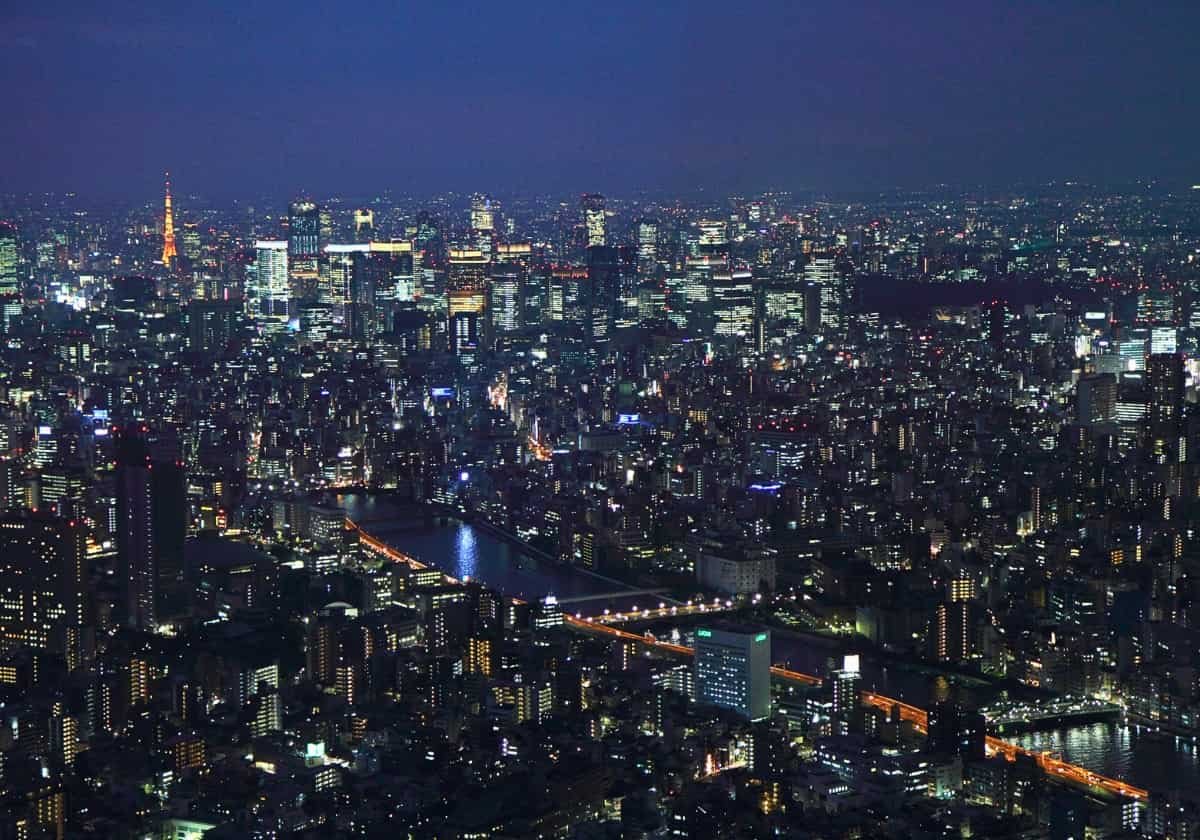
Tokyo at night is its own entirely different city. The daytime grid is functional, vast, and sometimes overwhelming. At night, it becomes a carpet of light that stretches to the horizon in every direction. Every observation deck on this list is worth considering for an evening visit, but some are transformative in a way that others aren’t.
Tokyo Tower is the one that tends to genuinely move people after dark. Something about the orange glow of the structure itself against the night sky, combined with the city lights spreading out below, creates an atmosphere that the taller, more modern decks don’t quite match.
Shibuya Sky at night has its own energy – the Scramble crossing below is at its most frenetic in the evening hours, and the open-air rooftop gives the city noise and wind and life in a way that glass enclosures simply can’t.
For free night views, the Tokyo Metropolitan Government Building is open until 10:30pm on most nights, and the city at that hour – lit, busy, spread out to the horizon – is as good as it gets for a night Tokyo cityscape without spending anything.
If you’re considering a Tokyo view hotel for waking up to the skyline, the Park Hyatt Shinjuku, Conrad Tokyo, and Andaz Tokyo all offer rooms with serious views – factor in that room upgrade if you’re celebrating something.
Best Tokyo Views During Cherry Blossom Season
Late March to early April transforms Tokyo’s observation deck experience. From any elevated vantage point on a clear day, the pale pink clouds of sakura appear in the parks below, concentrated around Ueno, Yoyogi, Shinjuku Gyoen, and along the Meguro River.
Shibuya Sky becomes especially worthwhile during this window. Yoyogi Park spreads out to the north, and with a good zoom you can pick out the sakura from above. The Meguro River cherry blossoms, one of Tokyo’s most photographed sakura spots, sits just south of Shibuya and are visible from the rooftop.
The Tokyo Metropolitan Government Building points you north and west across Shinjuku Gyoen, one of the city’s best cherry blossom parks. The Asakusa Culture Tourist Information Center rooftop, though lower, gives an intimate view of any sakura planted in and around Senso-ji’s grounds. Actually visiting Shinjuku Gyoen is well worth your time, so plan for about 2-3 hours there.
One practical note: observation decks are significantly busier during cherry blossom season. Book Shibuya Sky as far ahead as possible. The Skytree will be crowded but manageable with a pre-booked slot. Free options like the TMGB are first-come, first-served and may have queues in the elevator lobby on peak days.
Tips for Visiting Tokyo Observation Decks
When to Go for the Fewest Crowds
Weekday mornings and weekday evenings beat weekends at every single deck on this list. For Shibuya Sky and the Skytree, Tuesday and Wednesday are generally the quietest days. Avoid Golden Week (late April to early May), Obon (mid-August), and the cherry blossom peak unless you’ve booked well in advance.
For Tokyo Tower, the crowds are heaviest on weekends and during the evening illumination hours. Going just before sunset on a weekday gives you the best of both: the day-to-night transition and a relatively calm experience.
The free options (Metropolitan Government Building, Bunkyo Civic Center, Caretta Shiodome) are consistently quieter than the paid decks, regardless of the day.
Day Views vs Night Views – Which Is Better?
It depends entirely on what you want. Daytime views are clearer and give you better spatial context, so you can understand Tokyo’s layout, spot Fuji on the right day, and see the districts spreading out to the horizon. They’re better for first-timers who want to orient themselves.
Night views are more emotionally charged. The city lights turn an already staggering urban panorama into something that feels almost cinematic. For couples, for photographers looking for that dramatic shot, and for anyone who’s already seen the daytime version, evenings consistently deliver.
Tokyo view spots for sunset, the blue hour just as the sun drops and the city lights begin to warm up, are the sweet spot. Arrive 30 to 45 minutes before sunset, stay until it’s fully dark.
The Verdict – Which Tokyo View Is Worth Your Time?
Here’s the honest, direct version:
Go to Shibuya Sky if you want the most atmospheric and photogenic experience in the city, especially at sunset. It’s unique, it’s open-air, and it earns every yen of the ticket price.
Go to Tokyo Skytree if this is your first time in Tokyo and you want to feel the true scale of the city. The height is simply unmatched, and the experience around the decks is polished and impressive.
Go to Tokyo Tower if you want the most classically Tokyo night view, or if you’re combining it with a Minato evening and the Roppongi Hills Tokyo City View. It’s cheaper, no booking required, and the tower’s glow at night is genuinely iconic.
Go to Roppongi Hills Tokyo City View if you want to combine a world-class art museum with a good view and a stunning Tokyo Tower composition in the foreground. It’s the best-value full-day cultural experience of any of the paid options.
Add the Tokyo Metropolitan Government Building to every itinerary. Free, open late, outstanding view. There is no reason not to go.
Go to Sunshine 60 Tenbou-Park if you want to entertain your kids for a few hours outside of busy seasons while also enjoying great views for a reasonable price.
Go to Ebisu Sky Lounge if you’re spending an evening in Ebisu, Daikanyama, or Nakameguro and want a relaxed, beautiful view over drinks without a ticket or a queue.
Visit I-Link Town if you want to see the Tokyo skyline from the outside looking in – a genuinely different and underrated perspective that costs nothing and takes half an hour to reach.
Save the rest of the hidden gems – the Asakusa rooftop, Caretta Shiodome, Bunkyo Civic Center – for the curious, the photographers, and anyone who wants a moment of Tokyo without the tourist scrum.
If you’re planning to visit multiple decks, slot them by neighborhood: Skytree with an Asakusa morning, Shibuya Sky at sunset after a Harajuku or Daikanyama afternoon, Roppongi Hills and Tokyo Tower for a Minato evening, and the Metropolitan Government Building as a free add-on to any Shinjuku night.
Ready to book? You can grab tickets online through the official websites or authorized platforms like GetYourGuide and Klook to skip the queues and lock in your preferred time slots. Here they are:
Tokyo Tower admission tickets for Main or Top Decks
Tokyo Skytree admission tickets for just the Tembo Deck and/or Tembo Galleria, or in combination with one of TeamLab Planets, Sumida Aquarium
Shibuya Scramble Square Shibuya Sky admission tickets
Roppongi Hills Observation Deck Tokyo City View admission tickets
Sunshine 60 Observatory admission tickets for all ages

