
Last updated on November 2nd, 2026
We rolled into Bath early in the day with exactly one day carved out for it, and honestly, we were a little worried it wouldn’t be enough. A city this pretty, this old, this stacked with things to do, in just one day in Bath, England? It felt like a gamble. It wasn’t. We left having seen the big names, found a spot most visitors walk right past, and still had time for a proper lunch by the river.
Bath sits in Somerset, about 80 minutes west of London by train, and the whole city centre is small enough to cover on foot. That’s the secret nobody tells you upfront – this isn’t a sprawling destination where you need three days just to get your bearings. It’s compact, walkable, and built for exactly the kind of tight, well-planned day we’re about to hand you.
Jump to ...
Is One Day in Bath Actually Enough?
Yes. We’ll say it plainly because so many guides dance around it: you can absolutely do Bath in a day and come away feeling like you actually saw the place, not just ticked boxes. The Roman Baths, Bath Abbey, Pulteney Bridge, and the Royal Crescent are all within a 20 minute walk of each other. You’re not racing across town between stops. You’re strolling.
What one day won’t give you is downtime. You won’t get a lazy afternoon in a museum you didn’t plan for, or a long soak at the spa without watching the clock. If that sounds stressful, a night in Bath fixes it completely. If it sounds fine, keep reading, because the itinerary below is built to make a single day feel unhurried anyway.
Day Trip vs. Overnight: Which Fits You Better
Here’s a quick way to decide. A day trip works well if you’re based in London or nearby, you’re comfortable with an early start, and you’d rather spend your nights somewhere else on your trip.
An overnight stay makes more sense if you want to actually use Thermae Bath Spa in the evening (rushing a spa visit defeats the point), if you want to explore the Wiltshire countryside near Bath, if you’re traveling with kids who do better at a slower pace, if you want to get golden hour on the Royal Crescent in late spring or summer, or if you just like having dinner somewhere without watching for the last train.
Best Time to Visit Bath for a Day Trip
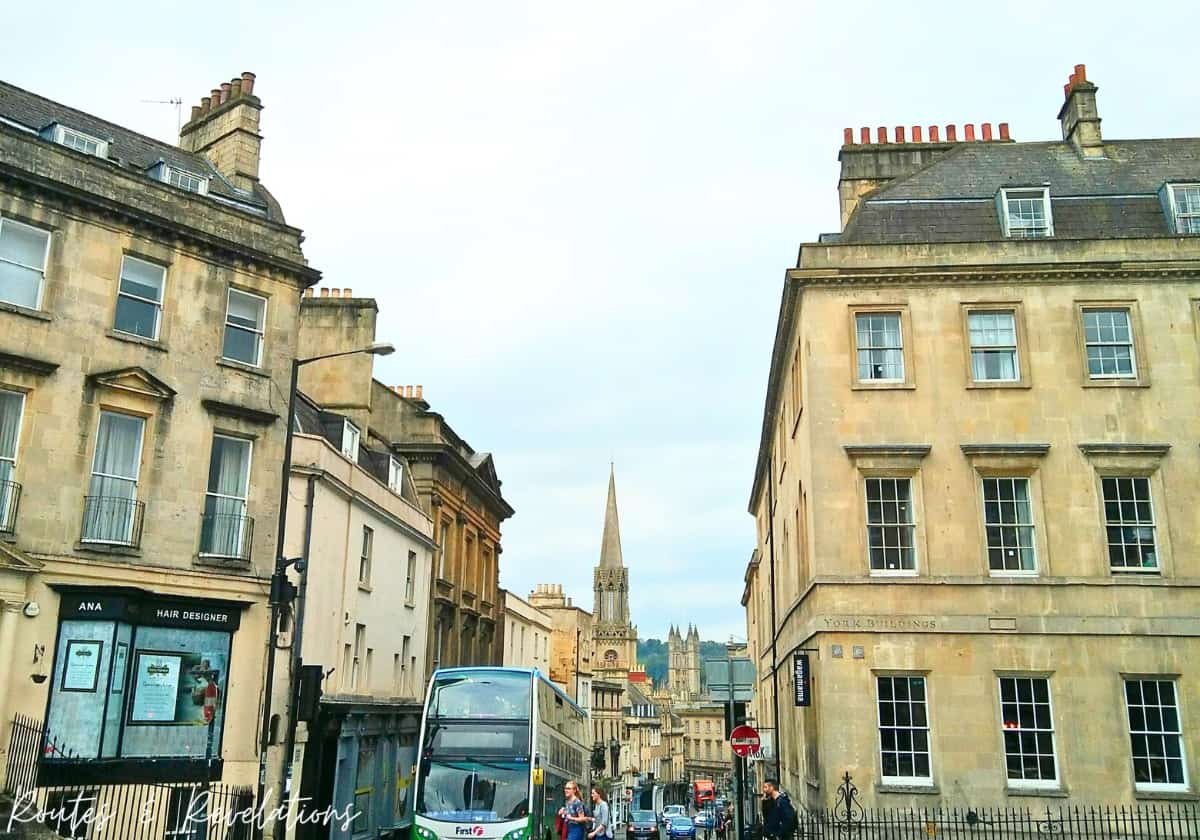
Late spring and early autumn hit the sweet spot: mild weather, gardens in bloom or turning gold, and noticeably thinner crowds than peak summer. July and August are gorgeous but busy, especially around the Roman Baths and Pulteney Bridge, where tour groups stack up by mid-morning. Winter has its own charm, quieter streets, and the Christmas market. Pack for rain either way. Bath gets its fair share of it, and a good chunk of what you’ll see is outdoors.
Getting to Bath: Your Travel Options
By Train
This is the easiest and fastest way in, especially from London. Direct trains by National Rail or Great Western Railway run from London Paddington to Bath Spa in around 90 minutes, dropping you a five minute walk from the Roman Baths. It’s the option we’d recommend to almost anyone doing this as a day trip, since it skips parking hassles entirely. Check current times and train fares on Omio before you book, since schedules shift with the seasons.
By Car
Driving gives you flexibility, especially if you’re planning to combine Bath with somewhere less train-friendly like the Cotswolds or ancient sites like Avebury and Stonehenge. The catch is parking: central Bath has limited spaces and they fill early. Your best bet is one of the park and ride sites on the edge of the city, which run regular buses into the centre.
Guided Day Tours: Walking Tour or Bus Tour
If you’d rather not plan the logistics yourself, both options exist and both genuinely work, just for different kinds of travellers. A walking tour gets you closer to the details, the stories behind specific buildings, the bits of Georgian gossip that don’t make it into guidebooks, and it’s ideal if you’re staying overnight and don’t need transport included.
A bus tour from London bundles the whole day, travel and guiding together, and is often bundled with a visit to Stonehenge, Windsor, or the Cotswolds, which is the better call if you’re short on time or don’t want to think about train times at all.
Book a walking tour of Bath, either with or without Roman Baths entry or Bath Abbey tour.
Book a guided day trip from London to Bath.
The Perfect One Day in Bath Itinerary
This whole route works as a self-guided walking tour too, since everything sits close together. Here’s how we’d spend the day, and how we spent ours.
Morning: The Roman Baths and the Great Bath
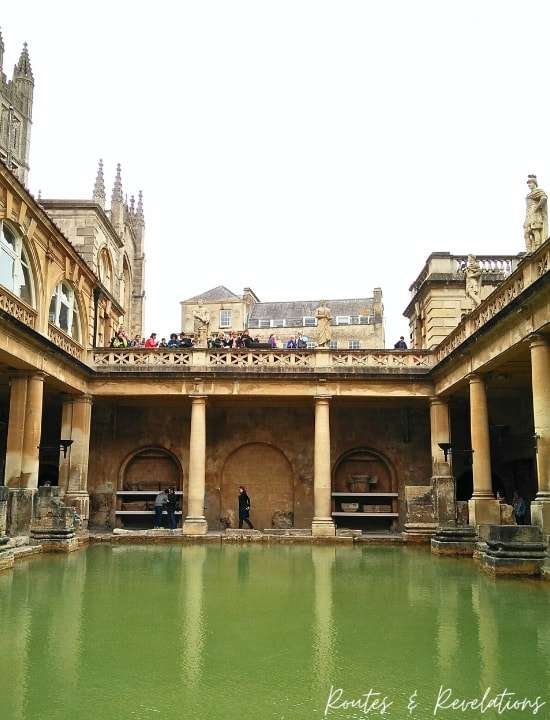
Start here, and start early if you can. This is Bath’s single biggest draw, and it gets genuinely crowded by mid-morning.
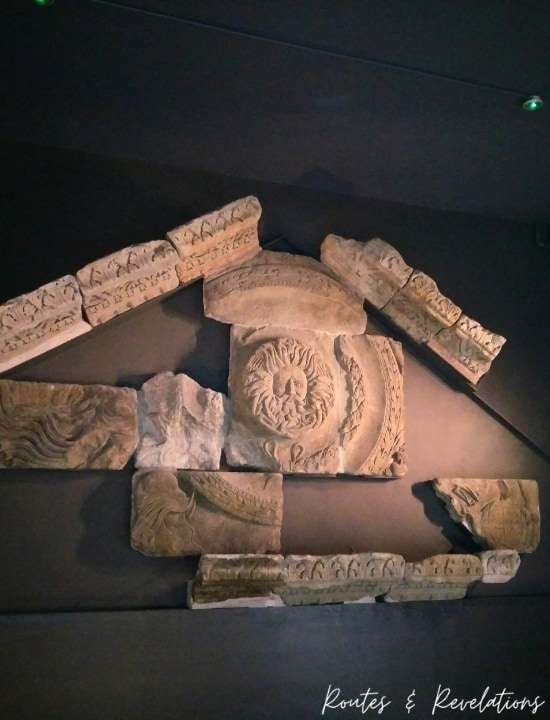
You’ll first step onto a terrace above the Great Bath itself, added when the site was excavated and reopened to the public in the 1890s, and get your first look at the water: a steaming, green-tinged pool that still fills with roughly a million litres of naturally hot water a day. From there, the route winds down through the museum level, past the reconstructed temple pediment centred on a carved stone face known as the Gorgon’s head, though historians still argue over whether it’s actually meant to be a Celtic water god rather than a gorgon at all. Nearby sits the gilded bronze head of the goddess Minerva, one of the most striking finds on the whole site.
The part that stuck with us most was the curse tablets. Roman visitors would scratch furious little notes onto sheets of lead, usually demanding the goddess punish whoever had stolen their cloak or their bathing tokens, then toss them into the Sacred Spring. Reading a two-thousand-year-old complaint about a stolen towel makes the Romans feel a lot less distant.
The site dates back to shortly after the Romans arrived in Britain in AD 43. They built the temple and bathing complex around a spring the local Celtic tribes already considered sacred, dedicating it to Sulis Minerva, a merging of the Celtic goddess Sulis and the Roman goddess Minerva, and the settlement that grew up around it became known as Aquae Sulis, the waters of Sulis.
The visit ends by looping through the Pump Room, an elegant 18th century hall where Georgian Bath came to see and be seen. You can still draw a glass of the spring water from the fountain here and taste it. Fair warning: it’s warm, mineral-heavy, and not exactly pleasant, but it feels like a rite of passage.
Admission includes an audio guide in a dozen or so languages and costs £29.00 on a weekend or bank holiday for adults and £26.50 on regular weekdays. Students and seniors get a £1 discount, children under 18 get a £7 discount, and there are 3 tiers of family tickets available too. Give yourself at least 90 minutes, longer if you want to properly read the exhibits, and book your ticket with a timeslot in advance since walk-up availability isn’t guaranteed.
There are official shared and private guided tours too if the audio guide doesn’t cut it for you. Expect to pay an additional £8 per person for the shared tour and £80 per tour for a private group of up to 10 people.
Bath Abbey and the Heart of the City
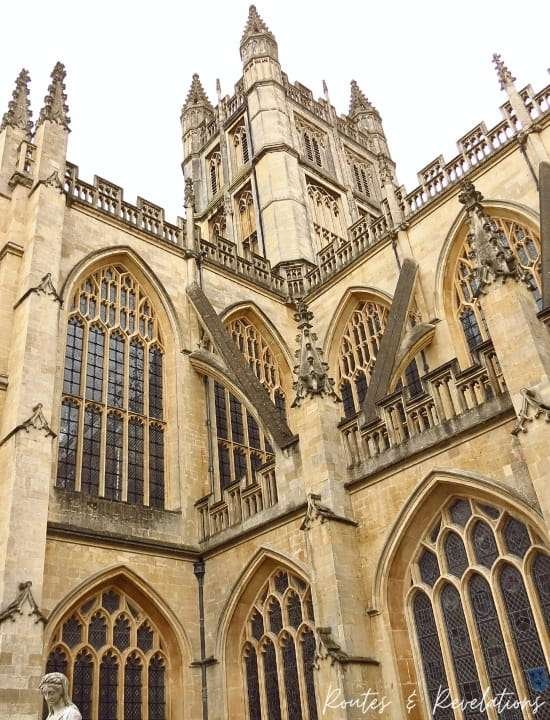
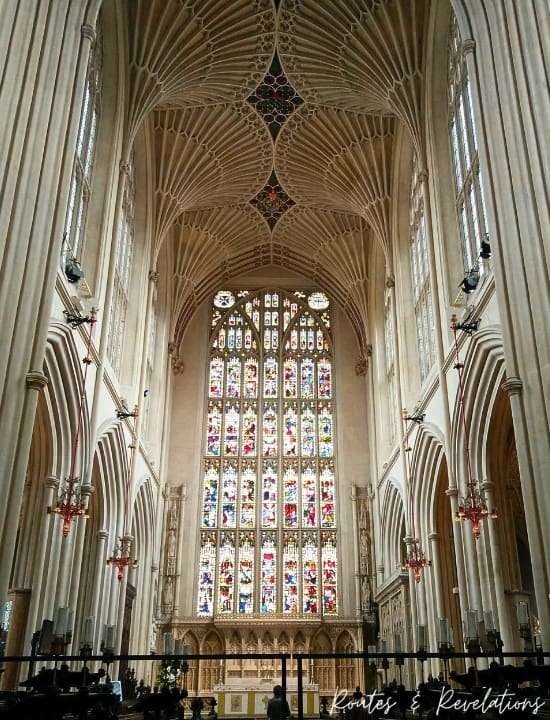
Right next door, Bath Abbey is worth ducking into even if you’re not usually a church person. Before you go in, look up at the West Front, where carved stone angels climb ladders on either side of the doorway, some of them sculpted upside down as if mid-tumble. The design is said to be based on a 15th century bishop’s dream of angels ascending and descending into heaven.
Inside, the ceiling is the real showstopper: fan vaulting so fine it looks more like carved lace than stone, with ribs radiating outward across the nave. Around 80 percent of the wall space is stained glass, which is why the abbey’s old nickname is the Lantern of the West, since light floods in from almost every direction. Look down as well as up: the floor and walls are covered in memorial plaques, including one for Beau Nash, the flamboyant Master of Ceremonies who basically ran Georgian Bath’s social scene and is buried in the nave under a monument far plainer than he probably would’ve liked.
One detail we love: the abbey is partly heated using warmth reclaimed from the overflow water of the Roman Baths next door, so eighteen-century engineering is still doing useful work today. If you’ve got the legs for it, the Tower Tour climbs 212 steps for a close-up look at the bells and clockwork and a genuinely great panoramic view over Bath’s honey-colored rooftops.
Only local residents and young children can enter the abbey for free. Standard adult tickets cost £9, with small discounts for students, children, seniors, and families. An audio guide is £3.50 extra and the Tower Tour costs £18 for adults.
Riverside Lunch or Elegant Afternoon Tea
You’ve got two classic options within a two-minute walk of each other, and honestly, picking one over the others is mostly about how much time you’ve got left and what your budget is.
The Pump Room Restaurant, the Georgian room where Jane Austen and Charles Dickens once took spa water, serves a daily Jane Austen Afternoon Tea alongside a morning bakery and brunch menu, with live music from the Pump Room Trio, a resident ensemble founded in the 1700s under Beau Nash, according to the Roman Baths’ Pump Room page.
If you want a more casual option, you can either grab lunch at one of the cafes along Argyle Street, or find a bench in Parade Gardens looking back at the Pulteney Bridge and the water, which I cover next.
Sally Lunn’s House, just a few minutes’ walk away, is Bath’s oldest house and serves the Sally Lunn Bun, a large, semi-sweet brioche-style bread that’s different from a standard Bath bun. It’s open daily from 10am to 9pm with the daytime menu running until 6pm, and the small bakery museum inside operates from 11am to 4pm. We went with Sally Lunn’s to get a quick picnic lunch, since the Pump Room’s full afternoon tea really deserves unhurried time.
Afternoon: Pulteney Bridge and Weir
Once you’ve had a bite to eat and your fill of Roman stone and abbey ceilings, the afternoon shifts to Bath’s Georgian side: the river, the squares, and the honey-colored crescents that give the city its postcard look. This stretch is entirely walkable, threading from Pulteney Bridge up through Queen Square and The Circus to the Royal Crescent.
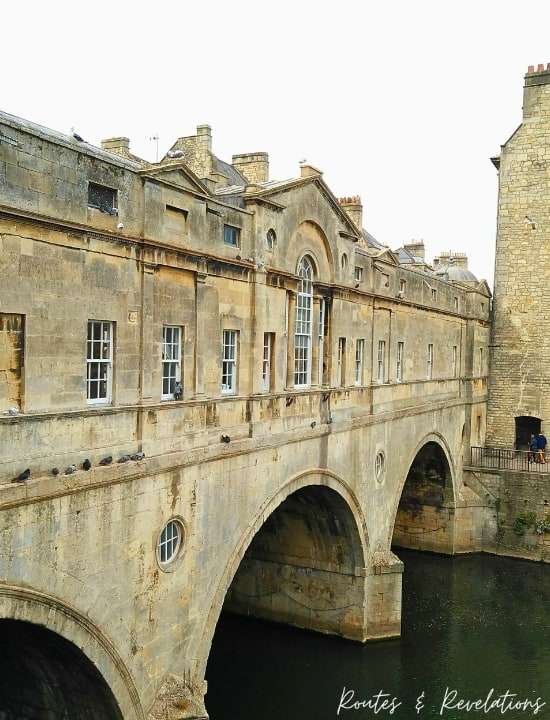
Pulteney Bridge doesn’t really feel like a bridge at all when you’re standing on it. Shops line both sides of the full span, so it reads more like a narrow little street than a river crossing, and you can walk straight across without ever seeing the water. It’s one of only four bridges anywhere in the world built this way, alongside the Ponte Vecchio in Florence, the Rialto in Venice, and the Krämerbrücke in Erfurt, Germany. The architect, Robert Adam, had visited both Florence and Venice before designing it, and it shows.
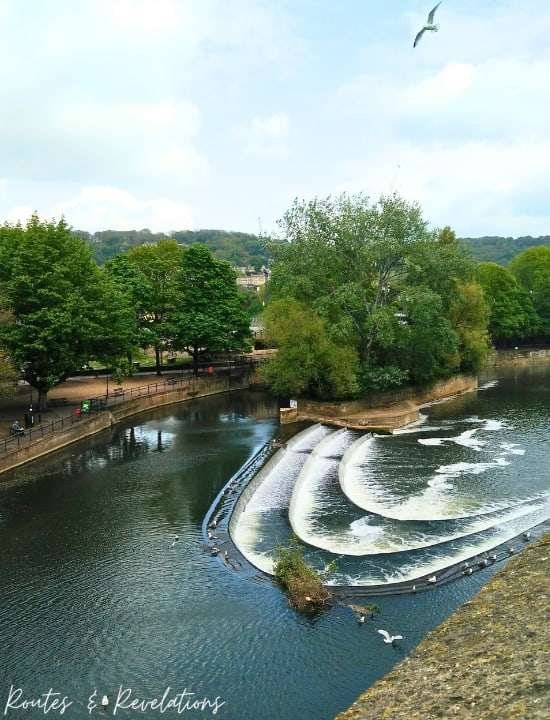
For the view everyone photographs, step off the bridge and down onto the riverbank, where you can see the whole structure along with Pulteney Weir, the horseshoe-shaped cascade rushing beneath it. The weir dates back to the early 1600s to control the water level of the River Avon and prevent flooding of the city. It was rebuilt in the current shape in the 1970s with controlled flood gates and a sluice added to make it more effective.
Follow Jane Austen or Bath’s Museum Trail
If literary history appeals more than warm water, the Jane Austen Centre sits a few minutes away and charges £18.00 for adults and £9.95 for children aged 6 to 16. You can get entry tickets to the center here. It covers her years living in the city and how it shaped her novels and pairs naturally with the Regency Tea Room next door. The Fashion Museum is another option if period clothing and costume history interest your group more than novels do.
Walk Through Queen Square and The Circus
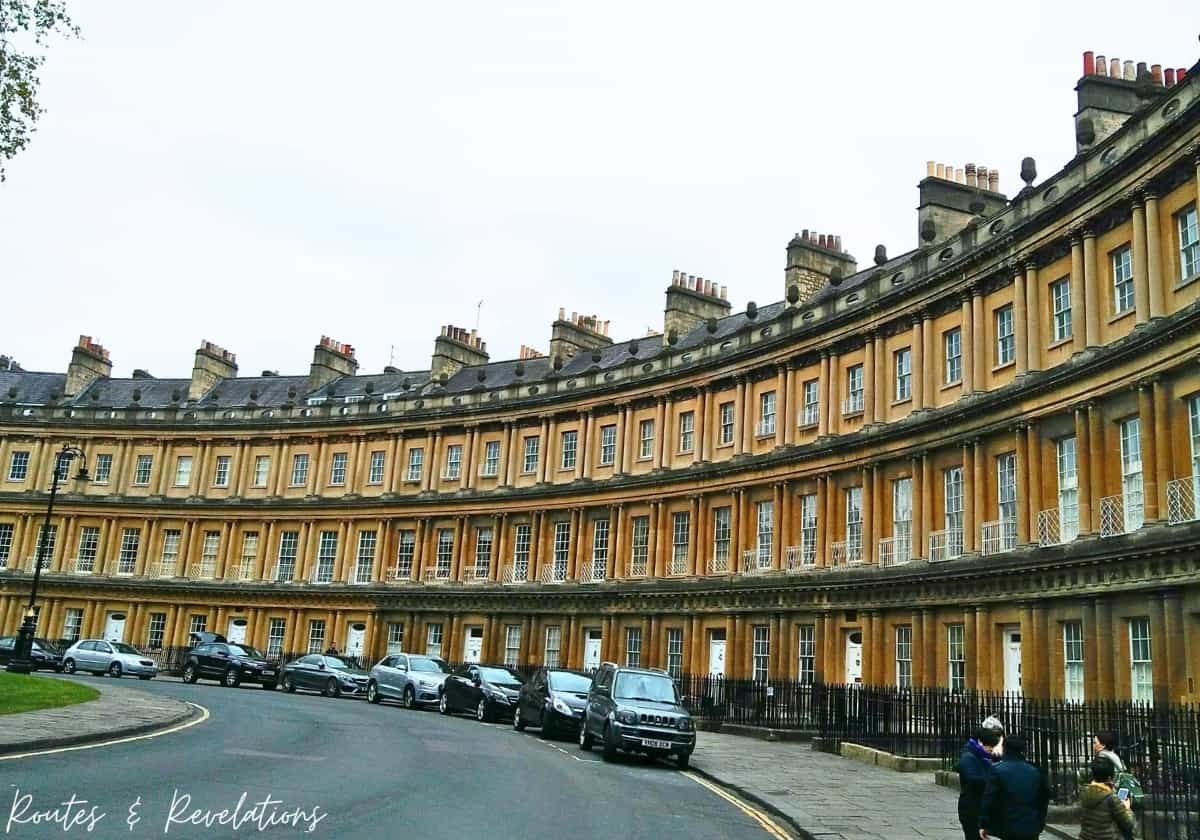
From the river, it’s an uphill walk toward Queen Square, then on to The Circus, the perfectly circular ring of townhouses that set the template for Georgian town planning across Britain. Milsom Street, just off this route, is the spot to duck into if anyone in your group wants shopping rather than more architecture. None of this needs a ticket. You’re simply walking through the city’s most photogenic quarter, and it’s exactly the kind of scenery that made Bath’s Georgian development, guided by figures like John Wood the Elder and Ralph Allen, part of what earned the city its UNESCO status.
Royal Crescent and Georgian Bath
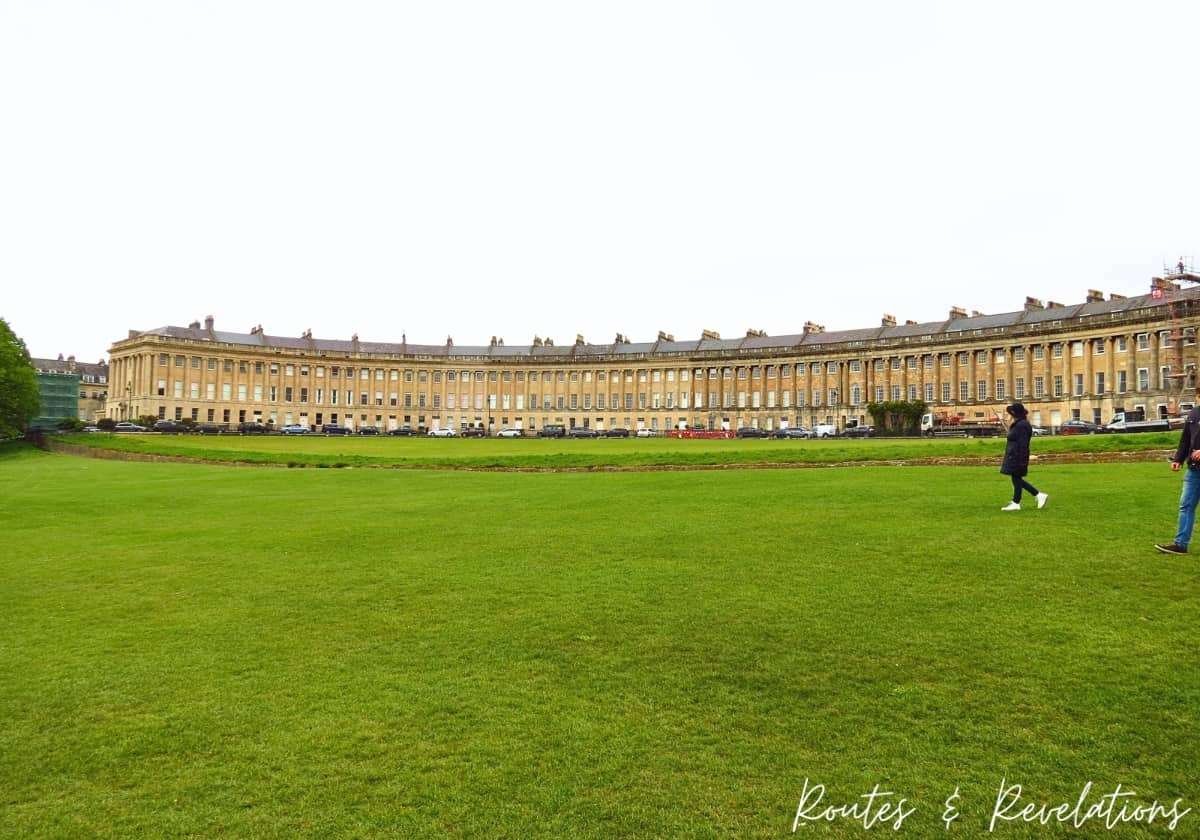
It’s a pleasant 5 minute walk from The Circus to the Royal Crescent, and this is where Bath’s Georgian side really shows off. Thirty grand houses sweep across roughly 500 feet in a single curved facade, designed by John Wood the Younger and built between 1767 and 1774. It’s considered the first crescent-shaped terrace built anywhere in Europe, and standing on the lawn in front of it, looking at that unbroken sweep of pale stone, it’s easy to believe.
If you only see it from outside, you’re still getting the full architectural impact. But if you want to actually step into Georgian life rather than just admire the facade, No.1 Royal Crescent, right at the end of the terrace, is set up as an immersive house museum, furnished and dressed as it would’ve looked in the late 1700s. Upstairs you’ll find the elegant, showy rooms: a drawing room, a dining table laid with an elaborate dessert course meant to signal wealth, since sugar was hugely expensive at the time. Below stairs, it’s a completely different world, the kitchen, scullery, and housekeeper’s room where the staff actually kept the house running. Seeing both sides back to back does more to bring Georgian Bath to life than any plaque ever could.
Book your tickets to No. 1 Royal Crescent in advance from the official website if you want to be sure to get your preferred time slot. Depending on the season, you’ll experience one of three themes inside. Tickets are reusable for repeat visits within 12 months, which is a nice touch if you end up loving Bath enough to come back to experience the other themes.
Roman Baths or Thermae Bath Spa? Deciding How to Spend Your Soak
Here’s something that trips people up: you can’t actually get in the water at the Roman Baths. It looks inviting, but it’s for looking only. If you want the real soak, Thermae Bath Spa is the modern equivalent, drawing on the same natural thermal springs at a steady 35.5°C.
The building itself is worth seeing on its own merits, a striking mix of old spa buildings and contemporary glass and stone architecture. The standout is the open-air rooftop pool, where you float in warm water while looking out over Bath’s chimney pots and the hills beyond, in a scene that changes completely between a sunny afternoon and a foggy evening. Downstairs, the curved Minerva Bath and a Wellness Suite with steam rooms round out a typical two hour session, which usually includes a robe, towel, and slippers.
Worth knowing if you’re travelling with family: children under 16 aren’t permitted in the main spa building, so this works better as an adults’ add-on than a group activity. On a tight day trip, it’s genuinely hard to fit in alongside everything else above. If you’re staying overnight, it’s one of the best reasons to.
A Hidden Gem Most Visitors to Bath Miss
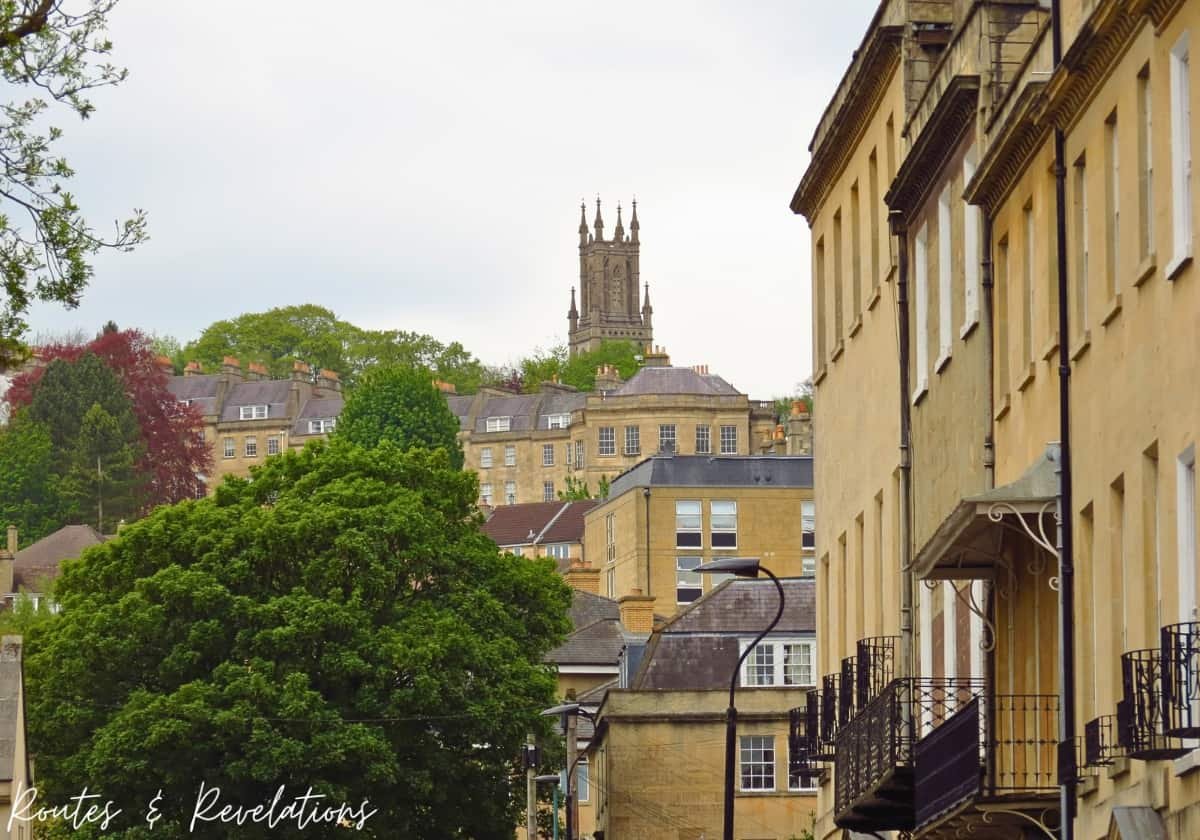
Almost everyone who visits Bath sees the Roman Baths and the Royal Crescent. Far fewer make it to Prior Park Landscape Garden, a National Trust site about a 25 minute walk (or short bus ride) south of the centre.
The walk in sets the tone: a path winds down through wooded “wilderness” planting, past a long serpentine lake, with the sound of a small cascade somewhere off to the side before you even see it. Then the Palladian Bridge comes into view, reflected in the water below, and it genuinely stops you for a second. The garden was created in the 18th century by Ralph Allen, a local entrepreneur who made his fortune from Bath stone, with design input from the landscape architect Capability Brown and the poet Alexander Pope. The bridge itself dates to 1755 and is one of only four bridges of this exact design anywhere in the world.
Keep climbing and you’re rewarded with sweeping views back over Bath’s rooftops and spires from a completely different angle than anything in the city centre. There’s a small Tea Cabin near the bottom if you want refreshments, and the garden connects directly onto the Bath Skyline, a longer circular walk past an Iron Age hill fort for anyone with extra time.
Worth knowing before you go: there’s no on-site parking, the walk down into the garden is steep, and you’ll be climbing back up afterward. It’s also not a quick stop, budget at least an hour. If your one day is already packed tight, this is the section most worth trading something else for.
Take a Quieter Walk Beyond the Centre
If you’d rather skip tickets altogether, the Bath Skyline walk is a six-mile circular route starting from Bathwick Hill that climbs above the city for views across the rooftops and surrounding hills, rated Moderate by the National Trust’s own trail page. The Kennet and Avon Canal offers a flatter, gentler alternative if you’d rather stroll than climb.
Combining Bath With Other Day Trips
Several people have asked me whether they can pair Bath with somewhere else in one day. Here’s the honest answer for each of the most common combinations.
Bath and Stonehenge in One Day: Is It Realistic?
Yes, and it’s a well-established route. Several operators run combined coach tours from London that hit Stonehenge in the morning and give you a few hours in Bath in the afternoon. The tradeoff is time: you’ll typically get around two to two and a half hours in Bath itself, enough for the Roman Baths and a walk past the Abbey and Pulteney Bridge, but not much more. If you want the fuller itinerary above, Stonehenge and Bath as a standalone day trip works better as two separate visits.
Bath and the Cotswolds: Worth Combining?
Also a real and popular pairing, usually run as a single coach tour from London that stops in Bath in the morning before heading on to northern Cotswolds villages like Bourton-on-the-Water and Burford in the afternoon. It’s a great option if picture-perfect stone villages are as much a priority for you as Bath itself. We also go into detail about the pros and cons of visiting the Cotswolds. For a deeper dive into the Cotswolds side of that trip, we’ve got a dedicated Cotswolds itinerary with Oxford here and a guide to the southern Cotswolds villages of Castle Combe and Lacock.
Bath and Oxford in a Single Day
This one’s less commonly packaged as a guided tour, but it’s doable on your own, although I wouldn’t recommend it unless you really must see both cities and don’t have more than a day to spare. Direct trains between Bath and Oxford take around an hour. Do just the heart of Bath in the morning using the itinerary above, then hop the train to Oxford for the afternoon to wander the colleges. It’s a very full day. For more on Oxford itself, see our one-day Oxford guide.
Bath and Bristol: The Easiest Add-On
If you only add one extra stop to your Bath day, make it this one. Bristol is under 15 minutes away by train, and its street art, harbourside, and slightly grittier energy make a nice contrast to Bath’s polish. It’s an easy half-day bolt-on if you find yourself with extra time.
Where to Stay If You Turn It Into an Overnight Trip

Staying central puts you within walking distance of everything in this guide, which matters more in Bath than in most cities given how much of the day is spent on foot. Look for something near the Abbey or along the Great Pulteney Street area if you want that classic Georgian setting right outside your door. We won’t quote specific rates here since they shift constantly, but use this accommodation map below to check current pricing and availability before you commit.
Practical Tips for a Smooth Day in Bath
Best Photo Spots in Bath
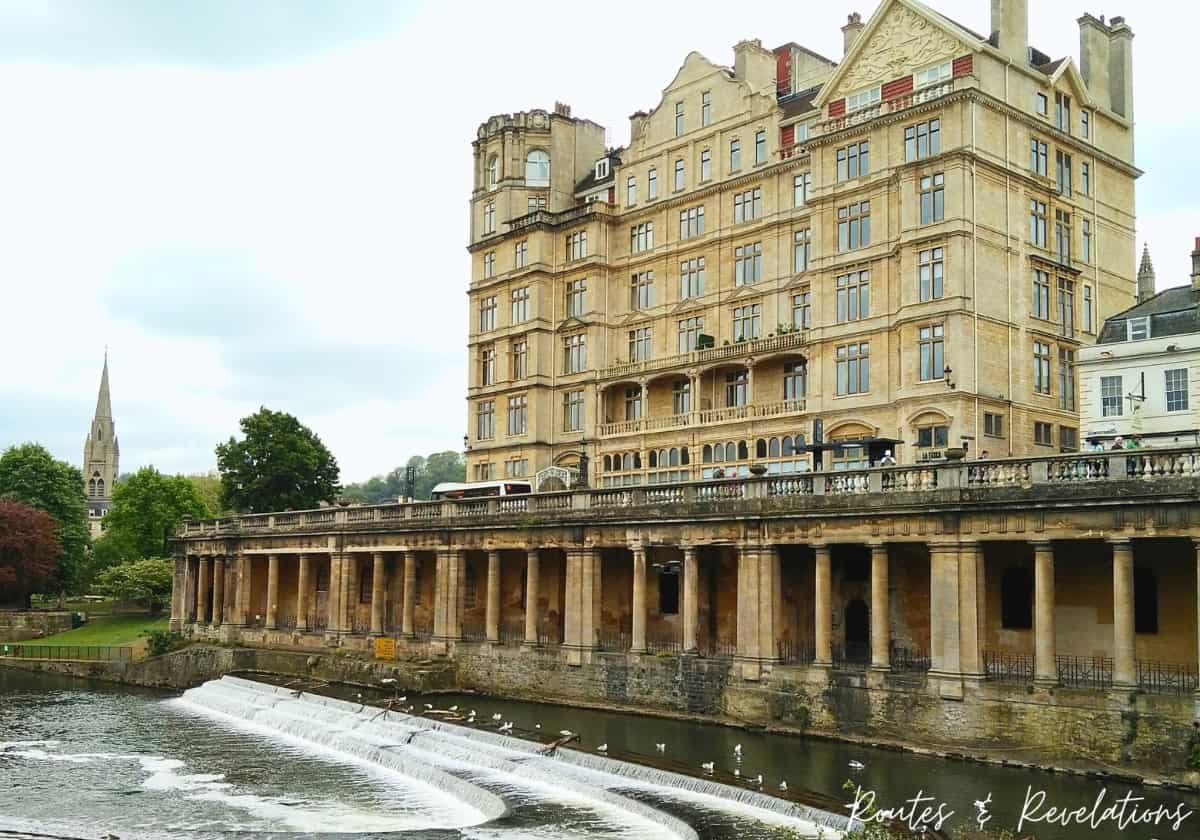
The view of Pulteney Bridge from the riverbank near Parade Gardens is the classic shot, best in early morning light before the crowds arrive. The Royal Crescent lawn works well any time of day. For something different, the view from Prior Park over the city rooftops is hard to beat and far less photographed.
Visiting Bath With Kids
Kids tend to genuinely enjoy the Roman Baths, there’s something about ancient ruins and steaming water that lands well with most ages. The Jane Austen Centre is a tougher sell for younger children, so weigh that against your itinerary. Prior Park’s open lawns and lake views and the Royal Victoria Park below the Royal Crescent also give kids room to run that the busier city centre doesn’t.
Visiting Bath Solo
Bath is an easy, comfortable solo destination. Everything in this itinerary is walkable, well signposted, and safe to explore alone during daylight hours. If you’re travelling solo, the flexibility of a self-guided day works especially well here, since you can linger exactly as long as you want at each stop without coordinating with anyone else.
Budget Tips for a One Day Trip
The single biggest cost is usually the Roman Baths entry, so book ahead online where it’s often cheaper than paying on the day. Bath Abbey also switched to a mandatory admission fee recently, and No. 1 Royal Crescent charges for entry to its immersive museum. Beyond that, most of the day, Pulteney Bridge and the walk to Prior Park, costs nothing at all. Check official sites for current ticket prices before you go, since these do change.
Bath Trivia and Quick Answers
Was “One Day” filmed in Bath?
No, and this is a common mix-up. Netflix’s “One Day” was filmed primarily in Edinburgh, London, and a handful of European locations, not Bath. The confusion likely comes from Bridgerton, which absolutely was filmed in Bath, with the Royal Crescent standing in for several of the show’s most recognisable exteriors. If period drama filming locations are what brought you here, Bridgerton is the one to look up.
What makes Bath special?
It’s the combination that does it: a genuinely ancient Roman site sitting a short walk from some of the best-preserved Georgian architecture in the country, all inside a city small enough to explore entirely on foot in a day.
What can you do in Bath for free?
Plenty. Walking the Royal Crescent, The Circus, and Queen Square costs nothing, and the Victoria Art Gallery’s permanent collection is free to visit. The Bath Skyline walk and a stroll along Pulteney Bridge and the riverfront round out a solid free afternoon.
Final Thoughts
One day in Bath, England works, and it works well, as long as you go in with a plan instead of trying to wing it. Hit the Roman Baths early, let the afternoon carry you from the Abbey to the Crescent, and if you can spare the hour, take the walk out to Prior Park. Book your train or tour ahead of time, and you’ll spend the day actually enjoying Bath instead of figuring out logistics on the fly.

